Why Type 1 MOT Costs More than Generic Crushed Rubble
At a Glance
MOT Type 1 costs more than generic crushed rubble because it is produced to recognised grading specifications, undergoes stricter quality control and delivers predictable compaction and load-bearing performance. While recycled rubble may suit non-structural applications, investing in Type 1 can reduce construction risks, maintenance costs and long-term project expenditure.
Call or email MiddAggs for quality MOT Type 1 supply.
Comparing MOT Type 1 and Crushed Rubble Costs
When comparing aggregates before placing an order, it’s easy to assume all crushed stone products will deliver the same result. Generic crushed rubble may appear to be the inexpensive option, but it often lacks the quality, consistency and engineering properties required for structural work.
MOT Type 1 aggregate has become the standard when constructing roads, driveways, commercial developments and infrastructure projects because it is manufactured to meet recognised standards and specifications. It typically costs more than recycled or upgraded crushed rubble, but the consistent performance and reduced risk of failure make it the more economical choice.
This guide helps developers and contractors understand the differences between Type 1 MOT and crushed rubble and choose the right material.
What Is MOT Type 1?
MOT Type 1 (also called Type 1 MOT) is a well-graded sub-base aggregate used to create strong, stable foundations for roads, highways, driveways, patios, car parks, footpaths and industrial yards.
The term MOT originates from the former Ministry of Transport specification. However, today’s materials are supplied in accordance with the Specification of Highway Works (SHW Clause 803) or equivalent recognised standards.
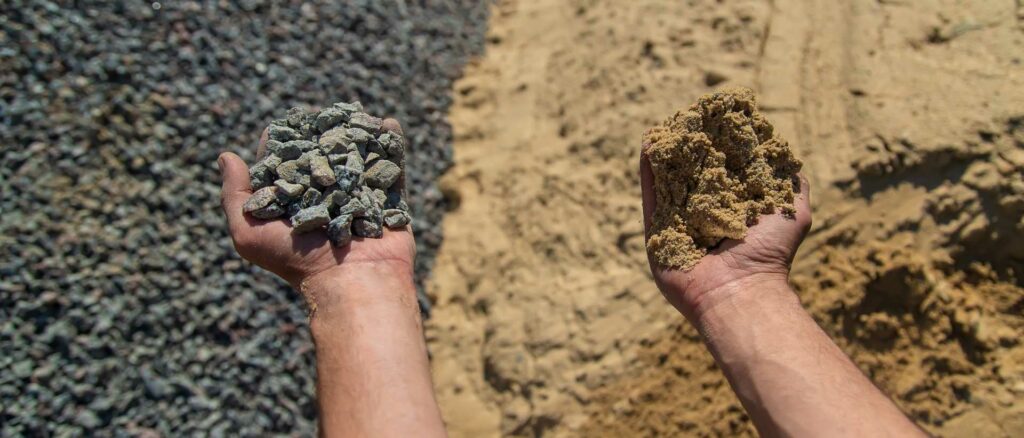
MOT Type 1 includes crushed limestone, granite, basalt or crushed concrete in particle sizes ranging from 0 mm fine dust to 40 mm stones. This combination serves three purposes:
- Finer particles fill gaps and bind the material
- Larger stones add strength and load-bearing capacity
- The overall mix compacts into a dense, stable layer
Once compacted, MOT Type 1 forms a strong, level base capable of supporting load-bearing vehicles, foot traffic and other loads.
Because of this predictable performance, MOT Type 1 usually costs more per tonne than rubble.
What Is Generic Crushed Rubble?
Generic crushed rubble is an umbrella term for crushed demolition materials that may or may not have been processed or graded to a particular specification.
Depending on its source, it can contain varying amounts of crushed concrete, brick, asphalt fragments, mortar, mixed stone and ceramics. As a recycled aggregate, it can be suitable for many applications, but generic crushed rubble can have a variable composition and particle size.
Unlike MOT Type 1, crushed rubble may contain excessively large particles, insufficient binding fines, variable moisture content, inconsistent grading and soft contaminants.
As a result, it suits temporary haul roads, bulk fill or non-structural work, but it is less reliable where a stable sub-base is required.
Why MOT Type 1 Costs More
The higher cost of MOT Type 1 can be attributed to additional processing, quality control and performance assurance in material production.
1. Manufactured to a Recognised Specification
Unlike generic crushed rubble, MOT Type 1 must meet strict grading standards. Every load must deliver the correct balance of larger aggregates and finer particles. This combination supports excellent compaction and reduced air gaps in the finished sub-base.
2. Higher-Quality Source Material
Often, Type 1 aggregates are sourced from limestone, granite and other durable quarried rocks. Using these hard-wearing materials offers better resistance to weathering and repeated traffic loads than rubble or demolition waste.
3. Additional Processing
MOT Type 1 costs more because its production involves multiple stages of processing, including crushing, screening, grading, removing oversized material, quality checks and managing stockpiles.
While each stage adds to the production costs, it also ensures a more consistent final product.
4. Better Compaction Performance
Type 1 has more tightly controlled particle sizes, allowing it to compact more quickly and achieve higher densities. This lowers the chance of soft spots, surface movements, future settlement and failed compaction tests.
5. Complies with Construction Specifications
Many commercial projects, highway works and building developments specify the use of MOT Type 1. Using any alternatives may result in a failed inspection or costly replacement work.
These qualities of MOT Type 1 give contractors the confidence that the material will perform as expected.
How Much MOT Type 1 Do You Need?
A tonne of MOT Type 1 can cover approximately 10-12 sq. m at a depth of 50 mm and 5-6 sq. m at a depth of 100 mm.
Most projects require 100 mm for pathways and patios, 150 mm for driveways and more than 200 mm for heavier loads.
When purchasing aggregate in bulk, it’s also important to consider the effect of compaction, which can reduce the depth by around 20%.
How Using Cheaper Alternatives Can Cost You
MOT Type 1 price per tonne is usually higher than the cost of a tonne of generic crushed rubble. Choosing rubble may reduce initial material costs, but it can lead to hidden expenses if performance falls short.
- Poor compaction: Inconsistent grading can affect compaction, and contractors may need to make extra roller passes, use more labour, carry out further testing and order replacement aggregate. These costs can quickly outweigh the initial savings.
- Increased settlement risks: Poorly compacted foundations can lead to sunken driveways, uneven paving, cracked concrete, rutting and potholes. Repairing these defects often needs excavating the finished surface and rebuilding the sub-base.
- Higher maintenance costs: Uneven or weak surfaces may require more frequent repairs, increasing overall costs.
- Delayed construction schedules: Failing compaction tests or inspections may halt construction until the sub-base meets specifications.
Contact MiddAggs for MOT Type 1 Supply
Choosing the right aggregate between generic crushed rubble and Type 1 MOT depends on the application. The cheapest material is not always the most cost-effective or suitable for all applications.
Generic crushed rubble is cheaper and works well for general fill or temporary works, but is not automatically a substitute for a specific sub-base material such as Type 1 MOT.
Our MOT Type 1 subbase is trusted by many clients for a wide range of applications, from highway construction to landscaping projects.
Whether you’re building a domestic driveway or delivering a large infrastructure project, our team can help you choose the right aggregate for a stable, strong foundation.
Contact us today to discuss your project needs and lock in a competitive per-tonne quote for MOT Type 1.