How To Choose The Right Aggregate For Your Next Project
Whether you are planning a large development or a smaller DIY landscape project, you will likely need aggregates.
Aggregates have many uses from creating a solid foundation to serving as a top decorative layer for landscaping.
For any type of project, using quality aggregates is essential to ensure its success. However, with so many different types of aggregates available, how do you choose the right aggregate for your project?
We understand that this can be a challenging decision to make. To help you make the right selection, we have put together this article covering the key factors you need to consider when choosing an aggregate for your project.
Let’s get started!
1) Project Requirements
When choosing the right aggregate for your project, start with understanding the specific requirements of your project.
Each type of project, whether residential, commercial or industrial, has its own requirements. Whether it’s regarding building foundations or drainage solutions, every project’s needs have to be met to ensure the best results.
When choosing your aggregate, you also need to consider its load-bearing capacity, durability and decorative aspects. In many cases, the colour and texture of the aggregates you choose make a significant difference.
2) Strength of Aggregate
Strength plays a crucial role when selecting your aggregate. Your chosen aggregate has to be strong enough to withstand harsh conditions without becoming worn down.
For projects that require high durability and load-bearing capacity, such as driveways, large buildings and roads, aggregates with high strength are often the best fit.
With any project, you want to choose aggregates that are long-lasting and able to maintain the integrity of your structure.
3) Shape, Structure and Size of the Aggregate
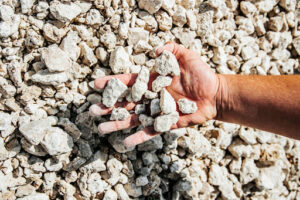
Alongside strength, three other very important factors you need to carefully consider are the shape, structure and size of your aggregates.
The shape and structure of your aggregates all affect the workability, compaction and look of your project. That’s why you need to carefully consider these factors when selecting your aggregate materials.
The size of your aggregate is also another critical factor that can affect the strength and finish of your project. As such, you need to make your choice based on your project’s specific needs and your desired outcome.
4) Environmental Considerations
In recent years, there has been a significant focus on the adoption of sustainable practices within the construction industry. When choosing aggregates for your next project, you also need to consider the environmental impact of your aggregates.
By choosing to use local aggregates, you can help cut down on transportation-related carbon emissions. Similarly, recycled aggregates provide a sustainable option that can make your projects more eco-friendly.
By considering the environmental impact of your chosen aggregate, you can ensure your project aligns with sustainability goals and meets regulatory standards.
5) Cost-Effectiveness
When it comes to choosing the right aggregates, quality and characteristics play a vital role. However, the cost of your aggregates is a factor you cannot neglect.
The price of aggregates can differ based on various factors like source, type, and transportation distance. For example, higher-graded aggregates may have a higher cost. However, just because an aggregate is less expensive, it doesn’t mean it isn’t the best choice for the job.
It is important to use the right aggregate to provide better durability and performance. This can save you money with long-term maintenance and repairs. For these reasons, you need to weigh the benefits of high-quality aggregates against their initial costs to effectively manage your budget.
6) Compliance with Standards
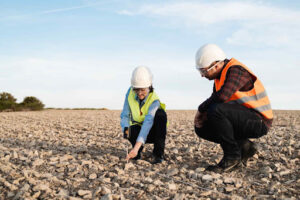
Aggregates have to meet national and local standards for quality, performance and safety to make sure they are fit for use.
By ensuring your aggregates comply with local and national standards, you can verify and test their quality. Using aggregates that comply with regulatory standards helps you avoid potential legal issues and can help secure project approvals and certifications.
7) Quality Assurance

When choosing quality aggregate for your project, it’s important to know the background of the material.
Poor quality materials may lead to short and long-term problems that result in costly repairs. To prevent this issue, you need to work with reputable aggregate suppliers who are able to provide consistent and reliable materials.
To ensure that quality standards are met, you can request and review certification from your aggregate suppliers.
Contact Middleton Aggregates For High-Quality Aggregates!
Choosing the right aggregates is an essential step that affects the lifespan of your project. If you’re having trouble deciding which aggregate is the best choice for your next project, we can help!
At Middleton Aggregates, we supply high-quality aggregates, fill materials, and plant hire services for all your construction and landscaping needs.
Based at Blackborough End, King’s Lynn with multiple outlets located across Norfolk, we are well-equipped to serve the Norfolk, Suffolk, Cambridgeshire and Lincolnshire area. Whether you’re undertaking a large commercial development or a small DIY project, we’ll deliver the best advice, quality materials and reliable deliveries all with a friendly and professional service.
For more information on our products and services, visit our website or contact us for more information or to schedule a delivery!

Aggregates are a granular mix used for various construction and landscaping projects. Popular examples of aggregate include sand, gravel, crushed gravel, and recycled concrete.
Aggregates are a key material in many types of infrastructure and represent the largest quantity of any building material in the construction industry.
From helping with aesthetic driveways to durable high-rise buildings, aggregates are very versatile. With their many uses in the construction and landscaping industries, learning which aggregate is best suited for various applications can be a bit of a minefield.
Aggregates are an essential component for holding structures together, but how do you choose the right aggregate for your construction project? Start by checking its quality.
In this article, we’ll explore some of the main factors that can help you check aggregate quality and choose the right aggregate for your project.
1) Abrasion and Skid Resistance
When you check aggregates for quality, you will need to evaluate their abrasion and skid resistance. These properties help you understand an aggregate’s resistance to wear and tear and how it performs with friction.
You need to consider these essential factors when you’re selecting materials for surfaces such as roads and driveways, which are expected to see heavy levels of traffic. Surfaces that are regularly subjected to abrasions will require aggregates with excellent wear and tear resistance.
A smooth texture often helps improve workability, whereas a rougher surface can enhance an aggregate’s strength. Aggregates with high abrasion resistance can improve the longevity and safety of surfaces.
You can always test aggregates to measure their resistance and choose those that will maintain their integrity under heavy use.
2) Absorption and Surface Moisture
Another key factor to consider when you’re checking aggregate quality is their absorption capacity and surface moisture. Absorption measures the amount of water your aggregate can take in, without affecting its strength and workability.
Too much absorption may weaken your mix, while too little can result in poor bonding. The surface moisture in aggregate can also significantly influence the durability and strength of your mix.
Use a moisture metre to check your aggregate’s surface moisture content and absorption. By controlling surface moisture, you can ensure consistency in your mix. You’ll be able to prevent unexpected issues and create strong and durable structures when moisture levels are properly managed.
3) Durability and Toughness
The durability and toughness of your chosen aggregate are also essential factors you need to consider when beginning any project.
Many buildings and road structures are subject to heavy impacts such as heavy rain and moving footfall. Durability and toughness are key properties that ensure your aggregate can withstand these conditions.
Through certain tests, such as the Aggregate Impact Value (AIV) and Aggregate Crushing Value (ACV), you can assess these properties and make informed decisions.
Durable aggregates enhance the longevity and resilience of structures. For this reason, you need to select tough aggregates to minimise damage and repairs. This will enable you to construct safer and more reliable structures that can withstand harsh environmental conditions.
4) Grading
Grading is the size distribution of aggregate particles and is measured using sieve analysis. Proper grading helps ensure an ideal particle size range to increase the strength and workability of your mix.
Well-graded aggregate creates a compact, dense mix that enhances structural integrity. Using poorly graded aggregates may lead to issues, such as segregation and voids, that could negatively impact your structure.
When you’re checking aggregates for quality, look for well-graded aggregates to reduce the risk of voids and maintain quality control.
5) Unit Weights and Voids
Lastly, when you check aggregate quality, don’t forget to consider unit weight and void content as well.
Unit weight allows you to measure the density of aggregate. Void content helps understand the amount of empty space within a given amount of aggregate.
By using aggregates that have appropriate unit weights and minimal voids, you can create a dense and strong mix. Overlooking these factors could result in a less durable and potentially weaker construction.
By keeping a close eye on these factors, you can ensure that your structure is able to maintain structural integrity.
For High-Quality Aggregates, Contact Middleton Aggregates
The quality of aggregates largely depends on how they’re processed. However, as you will now have learned, there are still many factors that you can use to check aggregates and ensure they deliver the best results.
By checking aggregate quality prior to construction, you can build structures that are durable, safe and long-lasting.
If you require high-quality aggregates for your next project, we can help.
At Middleton Aggregates, we produce and supply aggregates, fill materials, and plant hire services for various landscaping and construction projects.
Situated at Blackborough End, King’s Lynn, with multiple outlets present across Norfolk, we’re well-equipped to deliver our friendly and professional service to the Norfolk, Cambridgeshire, Lincolnshire, and Suffolk areas.
Trust us to provide expert advice along with a reliable service that helps your projects stand on a solid foundation.
For more information on our products and services, visit our website or contact us to find out more.