Is Decorative Gravel the Right Choice for a High-Traffic Commercial Driveway?

At a Glance
Decorative gravel can be a practical and attractive choice for commercial driveways when traffic levels, vehicle types and pavement design are carefully considered. The right aggregate, supported by a well-constructed sub-base and proper drainage, delivers reliable performance for light to moderate traffic, while heavier-duty sites may require alternative surfacing materials.
Call 01553 841044 to discuss your requirements with the MiddAggs team and request a quote.
Choosing The Right Gravel
A commercial driveway is more than just aesthetics. It’s primarily about how well it can repeatedly carry vehicle movements, cope with braking and turning and remain safe for drivers and pedestrians.
When choosing a driveway material, it’s important to consider both the weight and the frequency of vehicular traffic. Decorative gravel for driveways, made from small stones, is a popular choice due to its aesthetic appeal and cost-effectiveness. But when heavy vehicular traffic is on commercial driveways, it’s worth asking whether decorative gravel can withstand the pressure.
In this guide, we explore the factors to consider when choosing the right decorative aggregates for driveways.
Understanding the Specification for a Gravel Driveway
A gravel driveway is typically designed in layers by highways or civil engineers, depending on the project. The right design depends on the existing ground conditions, drainage and anticipated loading.
A typical specification of a gravel driveway may include:
A Formation
The formation is the prepared ground on which the pavement construction is built. The stronger the formation, the less support your driveway needs.
A Separation Geotextile Where Required
Installing a geotextile membrane can prevent the subgrade and aggregate layers from mixing. This membrane not only stops weeds but also provides separation and filtration, preventing fine soil particles from entering the sub-base.
An Adequate Sub-Base
Most of the driveway’s structural support comes from the sub-base. This layer spreads wheel loads and creates a stable platform for the upper layer.
Correct Compaction
Aggregate should be placed in layers so that each layer can be compacted effectively using a roller or compactor.
A Controlled Surface Layer
Decorative driveway gravel should form a relatively shallow wearing layer over the structural foundation. A deep layer can make it harder for vehicles to move, encourage wheel rutting and allow more stone to migrate.
Secure Edge Restraints
Kerbs, setts, concrete edging or other suitable restraints help hold the aggregate in place.
Suitable Drainage
Gravel itself is permeable, but that does not automatically make the driveway a functioning permeable pavement. Water can only pass through the construction if the layers beneath it are designed to receive, store or convey it.
Can Decorative Gravel Driveways Handle High Traffic and Heavy Vehicles?
Decorative gravel can be used on a commercial driveway, but how suitable it can be depends on what “high traffic” means for the site.
A driveway serving an office with regular car movements has very different requirements from an industrial entrance used by heavy trucks and lorries throughout the day. Along with vehicle weight, traffic frequency and movement patterns are also important factors.
A gravel surface becomes less practical where vehicles repeatedly turn in the same place. Tyres push the aggregates sideways and can create bare patches, ridges and depressions.
Busy industrial entrances and HGV routes may benefit from concrete or asphalt for more predictable performance. Decorative stone can still be used beside the running surface, around landscaped areas or within low-traffic zones.
Choosing the Right Decorative Gravel for Driveways
Contractors and site managers need to consider multiple factors before choosing the right decorative gravel for driveways.
- Choose an aggregate that interlocks: Angular or crushed particles lock better than smooth, rounded gravel. Better interlocking helps in resisting surface movement under tyres.
- Select the appropriate particle size: Driveway aggregates are commonly chosen in the 10-20 mm size range, but this also depends on the vehicle types, accessibility requirements and the appearance of the project.
- Use clean, consistently graded material: Choose suppliers that deliver consistently graded aggregates to achieve a more uniform finish and better cover.
- Check stone strength and durability: Commercial driveways need aggregates that can withstand repeated crushing and abrasion under tyres. Avoid weak or friable stone that can break down over time and release fines.
When Decorative Aggregates Are the Right Choice and When They Are Not
Decorative gravel can deliver benefits, provided it is used in the right setting.
Decorative Aggregates Can Be the Right Choice For
- Office and visitor entrances: Gravel can create a softer and more attractive look than asphalt.
- Parking zones with light traffic: A properly constructed and stabilised gravel surface may work well where car movements are moderate, and speeds are low.
- Heritage developments: Natural gravel can complement traditional buildings and landscapes.
- Landscaped commercial schemes: Decorative stone can connect vehicle areas with planting, paths and building entrances.
Decorative Aggregates May Not Be the Right Choice For
- Busy HGV routes: Constant heavy loading, turning and braking of heavy vehicles can lead to rapid displacement and rutting.
- Routes that need effortless wheeled access: Loose, deep or rounded gravel can make it difficult for wheelchair users, pushchairs, trolleys and some mobility aids to move. Accessible routes require a firmer, more stable surface.
- Areas with intense turning: Tyres can push stone away from the turning points, exposing the underlying layers.
- Steep gradients: Loose aggregates can migrate downhill, reducing traction.
- Sites unable to maintain surface: When it’s difficult and impractical to inspect regularly, a decorative shingle driveway, asphalt, concrete or paving may offer better long-term value.
Call MiddAggs For The Right Aggregates For Commercial Driveways
For a high-traffic commercial driveway, decorative gravel should be selected as the surface layer within a proper pavement design, not relied upon as structural support.
If you need a reliable supply of quality aggregates along with practical guidance, contact MiddAggs. We supply natural aggregates, including gravel and decorative gravel, as well as other aggregates for driveways, pathways and commercial projects. You can source both visible decorative materials and the aggregates needed for the foundation from us.
Our gravel range for driveways includes:
- 4-10 mm Baston Gravel for use on pathways
- 6-14 mm Baston Gravel, regularly used on driveways and car parks
- 10-20 mm Baston Gravel, also for driveways and car parks
Whether you’re planning a new installation or upgrading an existing surface, we can help you select materials that are both visually appealing and structurally appropriate for your site conditions.
Speak to our team today to discuss your requirements.

Estimate the Right Aggregate Tonnage For Your Project
At a Glance
Accurately estimating aggregate tonnage helps prevent costly overordering, material shortages and project delays. By measuring the site correctly, applying a simple tonnage calculation or using a free aggregate calculator, contractors and homeowners can order the right quantity of gravel or aggregate for construction, landscaping and groundwork projects.
If you’re unsure how to calculate or estimate aggregate tonnage, contact our team on 01553 841044.
Estimating Aggregate Quantities
Contractors placing their orders for construction aggregates can often struggle to estimate the right quantity for the project. Order too much, and you may end up paying for quantities you don’t need, along with storage and disposal costs. Order too little, and you may risk delays in your project schedule while you wait for the delivery.
Whether you’re laying a driveway, preparing a sub-base or completing a landscaping project, accurately estimating aggregate tonnage helps you order aggregates without confusion.
This guide explains how to calculate tonnage for gravel and other aggregates, when online calculators come in handy and how MiddAggs can help you order the right aggregate quantity.
Why Is It Important to Estimate Aggregate Tonnage Accurately?
Estimating the right aggregate tonnage is important for keeping your projects moving smoothly without unnecessary delays or expenses.
When you order insufficient aggregate quantities, you may risk:
- Halting construction work until aggregates are delivered
- Spending extra on transport costs for small loads
- Inconsistencies in production batches in terms of colour and grading, particularly for decorative aggregates
However, ordering too much aggregate is not the automatic answer either. When you order aggregates in excess, you must also account for extra storage space, which increases overall project costs.
Another reason for correct aggregate estimation is to improve scheduling. Contractors need to plan deliveries around activities such as excavation, groundwork and installation without keeping labour and equipment idle.
Even if your calculation isn’t exact, a reasonably close estimate also reduces the risks associated with ordering.
The Simple Formula for Calculating Aggregate Tonnage
Calculating aggregate tonnage takes three simple steps.
Step 1) Measure the area’s length, width and planned depth in metres.
Step 2) Calculate the volume using the formula, Volume (m³) = Length × Width × Depth. You get the amount of material needed in cubic metres.
Step 3) Convert volume into tonnes.
Aggregates are normally supplied in bulk bags, so the next step is to convert m³ into an approximate tonnage weight.
Now, most construction aggregates weigh approximately 1.5 to 1.8 tonnes per cubic metre, depending on the material, grading and moisture content.
A commonly used tonnage estimate is:
Approximate tonnage = Volume (m³) × 1.6 tonnes
However, it’s important to note that this is only a guide for roughly calculating aggregate tonnage. Different products have different bulk densities with varying tonnes per cubic metre.
How Many Bags of Gravel Do I Need?
How many bags of gravel do I need for a driveway or a garden path? This is one of the most common questions homeowners ask.
The answer depends on the total area, depth, type of gravel and the size of each bag.
If you’re ordering aggregates for larger landscaping or construction projects, you may find that purchasing aggregates in bulk bags or loose-tipped deliveries is usually more economical than buying multiple small bags. Bulk delivery of aggregates becomes a more practical choice for both domestic and commercial projects.
If you’re unsure whether bags or bulk delivery represents better value, call 01553 841044. We can help by recommending the most suitable option based on your project and budget.
Using Online Aggregate Calculators vs Manual Estimation
Like many suppliers, MiddAggs also offers a free aggregate calculator for UK customers to use before placing an order. This tool can simplify estimating aggregate tonnage by converting your measurements into the quantity required based on the type of aggregate. Access our free aggregate calculator here.
Our online calculator offers multiple benefits:
- Get estimates calculated within seconds
- It uses product-specific density values
- Reduced risk of mathematical errors
- Easy comparison between different types of aggregates
Both the manual method and the calculator require accurate dimensions, so ensure your site measurements are precise to avoid errors.
If you’re still unsure, get in touch with our team for help.
Call MiddAggs to Order The Right Aggregate Quantity
Middleton Aggregates, now trading as Tillicoultry Quarries (EA) Ltd, has been producing and supplying a wide variety of aggregates and fill materials for UK construction projects.
We’ve been proudly serving projects across Norfolk and East Anglia from our base in King’s Lynn. We’re a trusted supplier for a range of quality primary and recycled aggregates across the region, including:
- MOT Type 1 Granite
- Subbase
- Natural Gravel
- Crushed Gravel
- Sand
- Recycled Crushed Concrete
- Carrstone
- Topsoil
Our team is always on hand to help you with measurements, product selection or delivery quantities. We can help you calculate what you need for your project.
Explore our aggregates range and contact us today to secure a quote.
What Are the Rules for Sourcing Construction Aggregates in England?
At a Glance
Construction aggregates in England must meet recognised technical standards and comply with planning, environmental and waste management regulations. Choosing a supplier involves more than comparing prices. It requires verification of product quality, supporting documentation, material traceability and regulatory compliance to ensure that aggregates are suitable for their intended construction or civil engineering applications.
For guidance on sourcing the right aggregate for the right application, call MiddAggs on 01553 841044 today.
Construction Material Regulations
It may not be an overstatement to say that no development is complete without construction aggregates. Whether you’re constructing a new housing development or installing a drainage system, almost every infrastructure project in England needs aggregates.
However, sourcing aggregates is not just about securing them at the lowest price. You need to partner with the right suppliers who comply with aggregate sourcing regulations, meet recognised material standards, adhere to environmental standards and operate under strict planning permissions. All these factors can make sourcing aggregates and materials more complex than they appear.
In this guide, learn the key rules and regulations for construction materials, including aggregates and what you need to know before choosing an aggregate supplier.
The Standards That Apply to Construction Aggregates
Aggregates need to satisfy different technical requirements depending on where and how they will be used.
Common aggregate standards include:
- BS EN 12620 for aggregates used in concrete
- BS EN 13043 for aggregates used in asphalt and surface treatments
- BS EN 13242 for aggregates used in unbound and hydraulically bound materials
- BS EN 13139 for aggregates used in mortar
- BS EN 13450 for railway ballast
Highways and infrastructure projects may also refer to the relevant clauses in the Specification of Highway Works. In some cases, suppliers must also provide conformity marking and a Declaration of Performance. Marking requirements, such as CE and UKCA marking, are subject to current UK government regulations, so suppliers should ensure they provide the conformity marking required at the time of supply.
Aggregate Sourcing Regulations
These UK Regulations influence how aggregates are extracted, processed, sourced, transported and supplied.
UK Aggregates Levy
The Aggregates Levy (AGL) is an environmental tax charged on the commercial exploitation of certain primary rock, sand and gravel. This levy is generally accounted for by the business responsible for the taxable commercial exploitation of the aggregate, although the cost is reflected in the price charged to customers. As of April 2026, the UK aggregates levy rate is £2.16 per tonne.
The levy is charged to support the efficient use of primary aggregates and encourage the use of secondary or recycled materials where suitable. This levy does not automatically apply to all aggregate products, as some materials (clay, slate, soil and by-products of metal refining or industrial combustion), uses and production processes are exempt or qualify for relief.
Waste Documentation and Management
In England planning policies follow a strict waste hierarchy and management processes. Businesses are legally required to prevent, prepare for reuse, recycle or recover materials before considering landfill disposal.
Many projects encourage or specify recycled construction materials to help meet sustainability objectives, including credits under schemes such as BREEAM, where applicable.
Construction waste needs to be handled with care in accordance with applicable duty-of-care requirements. When recycled aggregates are produced from inert waste, fully recovered, and meet end-of-waste criteria, they cease to be waste. The Aggregates from Inert Waste Quality Protocol offers a recognised route for demonstrating this in England.
Where recycled aggregate is being supplied, contractors may need documentation such as:
- Product description
- Delivery tickets
- Evidence of the material’s source
- Testing or grading data
- Waste transfer documentation where the material remains as waste
- Quality statement
- Evidence that end-of-waste requirements are met
Environmental Regulations
On certain sites, quarrying, processing and waste and water management activities need environmental permits from the Environment Agency. The exact permits depend on the activities undertaken on site.
Planning Permissions
You can’t start quarrying simply because a particular stone, gravel or sand has been discovered at a site. Extracting minerals needs planning permission from the relevant mineral planning authority. The planning process considers issues such as noise and vibration, dust and air quality, vehicle movements, landscape impact, groundwater and surface water and working hours.
Planning authorities control where extraction can take place, how long the quarry can operate and how the land must be restored when operations are complete.
An aggregate processing, quarry or recycling facility site may need:
- An environmental permit
- Mineral planning permission
- Water-related permissions
- Consent for specified plant or processing activities
- A waste carrier, dealer or broker registration
Technical Standards and Testing
Aggregate testing allows buyers to assess characteristics such as particle size and shape, refine content, contamination, chemical properties, durability, resistance to fragmentation and water absorption.
The test carried out depends on the proposed application. When sourcing aggregates, buyers should ask for relevant test results, grading information or a Declaration of Performance, as required by the project.
How to Verify Your Aggregate Supplier
A reputable supplier should be able to explain what material is supplied, where it’s sourced from and whether it is suitable for the intended purpose. A responsible supplier should not recommend a product without understanding its intended purpose.
Before ordering aggregates, ask these questions:
- For what purpose is aggregate used?
- Does it meet project specifications and standards?
- Can the supplier provide supporting documentation?
- Is the source traceable?
Why Customers Trust MiddAggs As Their Local Aggregate Supplier
For years, Middleton Aggregates, now a part of Tillicoultry Quarries (EA) Ltd, has supplied construction and landscaping aggregates to customers across Norfolk and East Anglia.
When you work with an established local aggregate supplier like us, you stand to gain clearer information about the materials you are ordering and receive support in selecting aggregate for a particular application.
We supply aggregates for a diverse range of uses, including:
- Sub-bases
- Building and concrete work
- Drainage
- Driveways, pathways and access roads
- Landscaping
- Civil engineering
- Decorative uses
Discuss your material requirements with our team, including the required quantity, the desired application and any guidance you need to ensure the material is used correctly.
Secure a quote for your project. Contact us today.
Why Type 1 MOT Costs More than Generic Crushed Rubble
At a Glance
MOT Type 1 costs more than generic crushed rubble because it is produced to recognised grading specifications, undergoes stricter quality control and delivers predictable compaction and load-bearing performance. While recycled rubble may suit non-structural applications, investing in Type 1 can reduce construction risks, maintenance costs and long-term project expenditure.
Call or email MiddAggs for quality MOT Type 1 supply.
Comparing MOT Type 1 and Crushed Rubble Costs
When comparing aggregates before placing an order, it’s easy to assume all crushed stone products will deliver the same result. Generic crushed rubble may appear to be the inexpensive option, but it often lacks the quality, consistency and engineering properties required for structural work.
MOT Type 1 aggregate has become the standard when constructing roads, driveways, commercial developments and infrastructure projects because it is manufactured to meet recognised standards and specifications. It typically costs more than recycled or upgraded crushed rubble, but the consistent performance and reduced risk of failure make it the more economical choice.
This guide helps developers and contractors understand the differences between Type 1 MOT and crushed rubble and choose the right material.
What Is MOT Type 1?
MOT Type 1 (also called Type 1 MOT) is a well-graded sub-base aggregate used to create strong, stable foundations for roads, highways, driveways, patios, car parks, footpaths and industrial yards.
The term MOT originates from the former Ministry of Transport specification. However, today’s materials are supplied in accordance with the Specification of Highway Works (SHW Clause 803) or equivalent recognised standards.
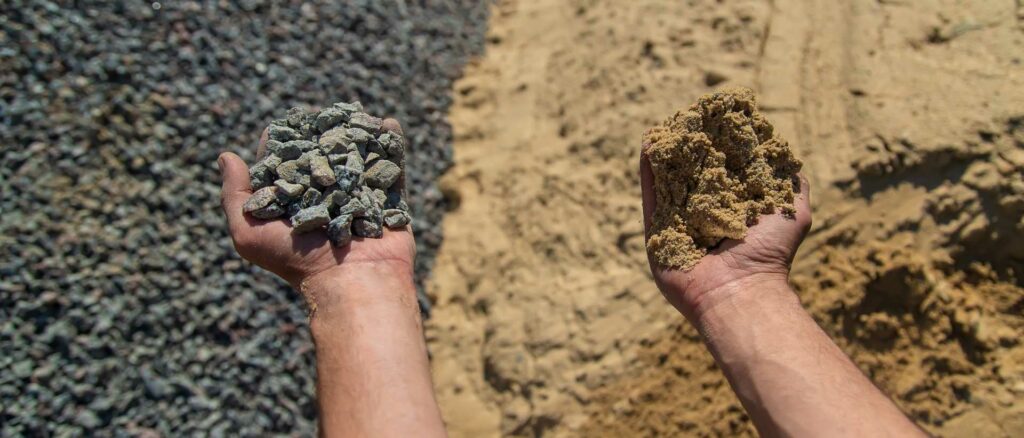
MOT Type 1 includes crushed limestone, granite, basalt or crushed concrete in particle sizes ranging from 0 mm fine dust to 40 mm stones. This combination serves three purposes:
- Finer particles fill gaps and bind the material
- Larger stones add strength and load-bearing capacity
- The overall mix compacts into a dense, stable layer
Once compacted, MOT Type 1 forms a strong, level base capable of supporting load-bearing vehicles, foot traffic and other loads.
Because of this predictable performance, MOT Type 1 usually costs more per tonne than rubble.
What Is Generic Crushed Rubble?
Generic crushed rubble is an umbrella term for crushed demolition materials that may or may not have been processed or graded to a particular specification.
Depending on its source, it can contain varying amounts of crushed concrete, brick, asphalt fragments, mortar, mixed stone and ceramics. As a recycled aggregate, it can be suitable for many applications, but generic crushed rubble can have a variable composition and particle size.
Unlike MOT Type 1, crushed rubble may contain excessively large particles, insufficient binding fines, variable moisture content, inconsistent grading and soft contaminants.
As a result, it suits temporary haul roads, bulk fill or non-structural work, but it is less reliable where a stable sub-base is required.
Why MOT Type 1 Costs More
The higher cost of MOT Type 1 can be attributed to additional processing, quality control and performance assurance in material production.
1. Manufactured to a Recognised Specification
Unlike generic crushed rubble, MOT Type 1 must meet strict grading standards. Every load must deliver the correct balance of larger aggregates and finer particles. This combination supports excellent compaction and reduced air gaps in the finished sub-base.
2. Higher-Quality Source Material
Often, Type 1 aggregates are sourced from limestone, granite and other durable quarried rocks. Using these hard-wearing materials offers better resistance to weathering and repeated traffic loads than rubble or demolition waste.
3. Additional Processing
MOT Type 1 costs more because its production involves multiple stages of processing, including crushing, screening, grading, removing oversized material, quality checks and managing stockpiles.
While each stage adds to the production costs, it also ensures a more consistent final product.
4. Better Compaction Performance
Type 1 has more tightly controlled particle sizes, allowing it to compact more quickly and achieve higher densities. This lowers the chance of soft spots, surface movements, future settlement and failed compaction tests.
5. Complies with Construction Specifications
Many commercial projects, highway works and building developments specify the use of MOT Type 1. Using any alternatives may result in a failed inspection or costly replacement work.
These qualities of MOT Type 1 give contractors the confidence that the material will perform as expected.
How Much MOT Type 1 Do You Need?
A tonne of MOT Type 1 can cover approximately 10-12 sq. m at a depth of 50 mm and 5-6 sq. m at a depth of 100 mm.
Most projects require 100 mm for pathways and patios, 150 mm for driveways and more than 200 mm for heavier loads.
When purchasing aggregate in bulk, it’s also important to consider the effect of compaction, which can reduce the depth by around 20%.
How Using Cheaper Alternatives Can Cost You
MOT Type 1 price per tonne is usually higher than the cost of a tonne of generic crushed rubble. Choosing rubble may reduce initial material costs, but it can lead to hidden expenses if performance falls short.
- Poor compaction: Inconsistent grading can affect compaction, and contractors may need to make extra roller passes, use more labour, carry out further testing and order replacement aggregate. These costs can quickly outweigh the initial savings.
- Increased settlement risks: Poorly compacted foundations can lead to sunken driveways, uneven paving, cracked concrete, rutting and potholes. Repairing these defects often needs excavating the finished surface and rebuilding the sub-base.
- Higher maintenance costs: Uneven or weak surfaces may require more frequent repairs, increasing overall costs.
- Delayed construction schedules: Failing compaction tests or inspections may halt construction until the sub-base meets specifications.
Contact MiddAggs for MOT Type 1 Supply
Choosing the right aggregate between generic crushed rubble and Type 1 MOT depends on the application. The cheapest material is not always the most cost-effective or suitable for all applications.
Generic crushed rubble is cheaper and works well for general fill or temporary works, but is not automatically a substitute for a specific sub-base material such as Type 1 MOT.
Our MOT Type 1 subbase is trusted by many clients for a wide range of applications, from highway construction to landscaping projects.
Whether you’re building a domestic driveway or delivering a large infrastructure project, our team can help you choose the right aggregate for a stable, strong foundation.
Contact us today to discuss your project needs and lock in a competitive per-tonne quote for MOT Type 1.
Understanding Construction Waste Recycling Processes
At a Glance
Construction waste is increasingly recycled rather than sent to landfill, with materials such as concrete, asphalt, metals, timber and soil processed into reusable aggregates and construction products. Recycling helps reduce landfill costs, lower material and transport expenses, improve resource efficiency and support sustainability targets while maintaining compliance with industry quality standards.
Request a quote from Middleton Aggregates for all your aggregate needs.
Where Does Site Waste Go?
The construction sector is a major waste producer in the UK, generating around 62% of the country’s total waste annually. This number covers waste from construction, demolition and excavation activities.
However, construction waste doesn’t disappear once it leaves a project site. It is transported to licensed recycling facilities, waste transfer stations or processing centres run by construction waste recycling companies.
According to the UK government, 59.4 million tonnes of non-hazardous construction and demolition waste were generated in 2020, of which 55 million tonnes were recovered.
But how is waste recycled? What types of construction waste can be recycled? Our guide explores these questions and more.
What Types of Construction Waste Can Be Recycled?
The good news is that a large amount of construction and demolition waste can be successfully recycled and reused within the construction sector. Recycling construction waste helps reduce environmental impact while supporting a circular economy approach, where materials are repurposed rather than discarded.
- Concrete: Concrete from demolition projects is crushed and screened to produce recycled concrete aggregates for use in sub-base layers, drainage applications and temporary roads.
- Bricks and masonry: Clean brick rubble can be crushed and graded for use in construction foundations and highway works.
- Asphalt and road planings: These are highly recyclable materials that can be processed and reused in road construction and maintenance projects. Using recycled asphalt can reduce the need for virgin bitumen and aggregates. Explore our subbase range.
- Soil and subsoil: Groundworks and site preparation generate soils that can be excavated, screened and reused for landscaping.
- Metals: Site waste often contains steel, copper, aluminium, lead and reinforcement bars that can be recycled.
- Wood: Timber waste from construction sites can be recycled into biomass fuel, wood chips or reprocessed timber products.
- Inert waste: Inert waste refers to materials like soil, tiles, ceramics, bricks and concrete that don’t chemically react or decompose. These materials can be recycled into secondary aggregate materials.
How Recycled Aggregates Are Produced and Graded
One of the outcomes of the construction waste recycling processes is recycled aggregates. At construction waste recycling companies such as Middleton Aggregates, high-quality aggregates often result from carefully controlled processing.
Construction waste recycling processes involve:
Crushing and Recycling
The recycling process begins by crushing large pieces of concrete, brick or asphalt into fragments small enough to screen and grade. This process uses mobile or static crushers, or both, depending on the scale of operations.
Screening and Separation
After the crushing process, screening systems are used to sift the materials into aggregates of different sizes. It may require additional separation processes, including magnetic removal of metals, washing to remove fines and debris and air separation of lightweight components.
Aggregate Grading
Next, grading takes place, where aggregates are sized according to their intended application. Common grades for recycled aggregates often include Type 1 recycled aggregate, crushed concrete, recycled asphalt planings and pipe bedding and drainage aggregates.
Quality Assurance and Compliance
High-quality recycled aggregate suppliers and construction waste recycling companies follow strict quality control procedures to ensure products meet industry specifications.
Standards may include material testing, particle size analysis, contamination monitoring, compliance with WRAP protocols and alignment with environmental regulations.
Using recycled aggregates allows contractors to achieve sustainability targets without compromising performance. For projects requiring bulk aggregate supply, Middleton Aggregates also provides primary aggregates along with recycled materials.
Cost Savings from Recycling vs Landfill
Recycling construction waste can yield significant savings compared to traditional landfill disposal.
With landfill rates rising across the UK, recycling has become an increasingly cost-effective solution for managing construction waste. Here are some benefits you can expect.
Reduced Landfill Tax Costs
Sending construction waste to a landfill involves disposal charges, landfill tax, transportation costs and additional environmental expenses. Instead, recycle these materials to reduce those costs.
Lower Material Purchase Costs
Using recycled materials is often more cost-effective than using virgin quarried materials. Contractors using recycled products can lower procurement costs while still achieving required performance standards.
Reduced Haulage Costs
Using local recycling facilities and recycled aggregate suppliers can help reduce transportation distances. This may lower fuel costs, vehicle movements, delivery times and carbon emissions.
Better Resource Efficiency
Construction waste recycling processes help maximise material recovery and reduce unnecessary waste. This supports more efficient resource management while helping preserve natural aggregate reserves. Businesses that integrate recycling into project planning often achieve both financial and operational benefits over the long term.
How Middleton Aggregates Supports Your Project
By managing waste and ensuring a reliable supply of aggregates, contractors can keep construction and infrastructure projects running smoothly.
MiddAggs provides a range of aggregate and recycling services designed to support contractors, developers, civil engineering firms and groundworks companies across a wide variety of projects.
When you partner with us, you stand to benefit from:
- High-quality recycled aggregate supply
- Primary and secondary aggregates
- Reliable delivery and logistics
- Rich industry expertise
- A certified construction waste recycling company
Operating from Blackborough End, King’s Lynn, we serve Norfolk, Suffolk, Lincolnshire, Cambridgeshire and the wider UK. Our team of industry experts is always available to provide you with the best advice and answer questions you may have.
To explore available products and services, visit the Middleton Aggregates homepage or contact the team directly on 01553 841044 to request a quote.
6 Ideas to Reduce Carbon Emissions in Construction Projects

At a Glance
Construction is a major source of global emissions, driven largely by embodied carbon from the production, transport and disposal of materials. Cutting a project’s carbon footprint requires practical changes such as low-carbon materials, local sourcing, lifecycle-led design, modular builds, stronger waste management and emissions tracking.
These steps can help reduce costs, meet environmental targets and support long-term sustainability. For sustainable aggregates for your next project, contact Middleton Aggregates for a quote.
Why Carbon Footprint Reduction is Needed in Construction Projects
The building and construction environment accounts for around 37% of global carbon emissions, making it one of the largest contributors. A sizeable portion of these emissions is due to embodied carbon, which accounts for up to 11% of global emissions.
With growing construction activity in the UK and the increasing scale and impact of embodied carbon, reducing carbon emissions in construction has never been more important. Embodied carbon comes from the extraction, production, transportation, construction, maintenance and end-of-life treatment of building materials.
Given its scale and resource use, even small changes, from choosing greener material choices to sourcing locally, can have a meaningful impact on carbon footprint reduction in construction projects.
In this guide, we’ll discuss 6 ways to reduce the carbon footprint in construction and the benefits of doing so.
How to Reduce Carbon Emissions on a Construction Site? Consider These 6 Ways
Reducing carbon emissions on construction sites requires a coordinated approach across materials, logistics and project design. Here are some of the most effective ideas:
1. Greener Material Choices
Consider using low-carbon, recycled, renewable materials, such as recycled concrete, to significantly reduce a building’s embodied carbon footprint.
At Middleton Aggregates, we can support your projects with primary and recycled aggregate materials. Our recycled aggregates range includes screened asphalt planings, crushed asphalt, crushed concrete and crushed brick, among other aggregate materials. They are produced in line with key environmental regulations.
2. Local Sourcing
Sourcing materials from local suppliers is an immediate way to cut transportation-related emissions. Local sourcing supports regional supply chains, particularly when haulage distances and logistics are optimised.
At Middleton Aggregates, we comply with applicable environmental regulations to minimise pollution and the relevant documentation is available here.
3. Low-Carbon Design
Carbon footprint reduction in construction projects can start at the design stage. A building’s environmental impact over its lifespan can be assessed using a Life Cycle Assessment (LCA), often introduced at the design stage and refined throughout the project cycle.
This assessment covers operational energy use, embodied carbon, maintenance and water consumption. It’s recommended for designers and subcontractors to integrate LCA into early-stage project planning to inform low-carbon decisions.
4. Using Modular & Prefabricated Construction
Prefabrication and modular construction involve assembling building components off-site, usually in a controlled environment. These off-site builds are manufactured with precision, reducing errors and material waste and, in turn, lowering emissions during construction.
Using prefabricated and modular construction elements may lower energy consumption, depending on manufacturing and transportation factors. Additionally, it can shorten construction timelines, supporting faster development and reduced emissions in the build phase.
5. Efficient Waste Management Practices
Construction projects can generate high amounts of waste. A significant amount of waste often ends up in landfills, further increasing the carbon footprint. You need an efficient waste management system that reduces, reuses and recycles to mitigate environmental impact.
As a responsible aggregate supplier, Middleton Aggregates adheres to the required waste management practices and holds relevant certifications.
6. Staying Accountable
Just as you would track your project financials, it’s equally important to track project emissions from start to finish. From using Environmental Product Declarations (EPDs) for materials to reporting carbon outputs, contractors stay aware of high-emission areas and can make more informed decisions to lower the project’s carbon footprint.
Benefits of Reducing Carbon Emissions
Lowering construction carbon footprint can have significant social, environmental and economic benefits. Some of the benefits include:
- Cost Savings: Using energy-efficient designs and sustainable materials can lead to long-term cost savings.
- Improve Air Quality: Lowering emissions from sites can improve air quality, reducing health risks for workers and nearby communities.
- Regulatory Compliance: As regulations tighten, reducing your carbon footprint can help your project comply with evolving laws and avoid fines.
- Better Brand Reputation: Companies that adopt sustainable practices are more likely to improve their brand reputation and attract environmentally conscious clients.
- Biodiversity Preservation: Using recycled and sustainable materials in construction can minimise resource depletion and habitat destruction while protecting ecosystems.
Support Greener Construction Choices with Middleton Aggregates
Reducing carbon emissions in construction projects has become a leading priority for recent governments in reducing the impact of climate change.
At Middleton Aggregates, we’re ready to support your projects with high-quality aggregates and plant hire services. For over forty years, our clients have continued to rely on us and our services for multiple reasons, whether it’s our diverse selection of aggregates and fill materials or our approachable customer service.
Operating from Blackborough End, King’s Lynn, we serve Norfolk, Suffolk, Lincolnshire, Cambridgeshire, and the wider UK. Our team of industry experts is always available to provide you with the best advice and answer questions you may have.
Contact us today for more information about sourcing recycled construction aggregates and fill materials.
Why You Shouldn’t Use Unwashed Decorative Stone on Your Civil Site
At a Glance
Unwashed decorative stone may contain dust, clay and fine particles that can reduce visual quality, impair drainage and increase maintenance requirements. While suitable for some non-visible construction applications, washed decorative aggregates provide a cleaner appearance, more consistent performance and improved long-term results for landscaping and civil engineering projects.
Washed vs Unwashed Stones
Aggregates are often used for decorative purposes to enhance the aesthetic appeal of commercial developments, public spaces, housing schemes and civil engineering projects. But it’s important to check the condition in which decorative aggregates are supplied.
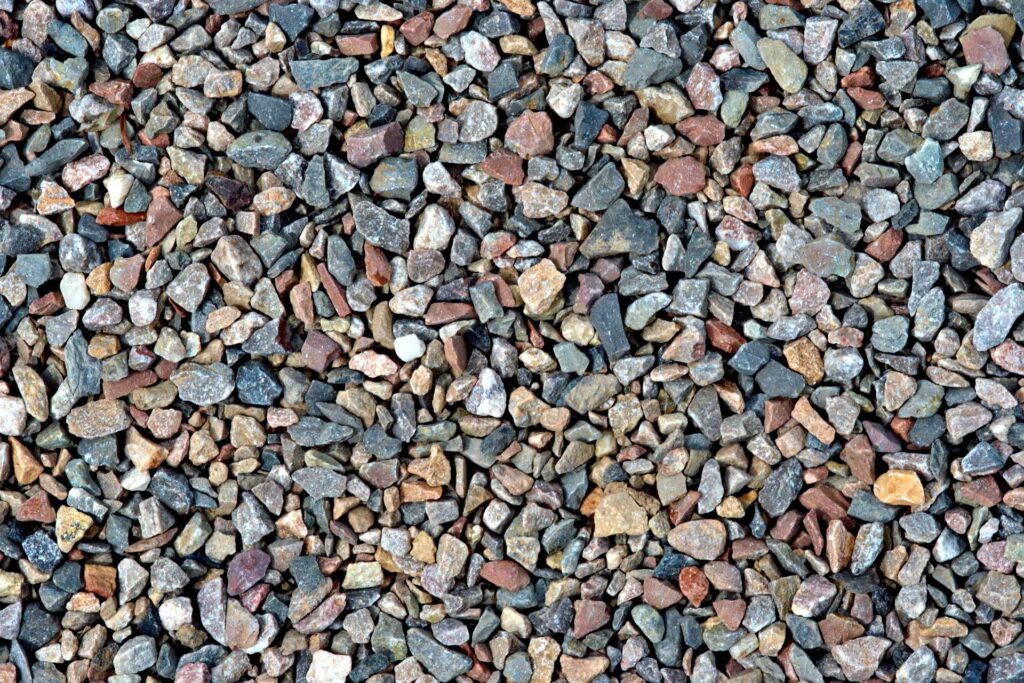
One important factor to consider is whether the stone has been washed before delivery. Unwashed stones for decorative purposes can resemble washed ones, but they often contain dust, debris, clay, fine particles and other residues. This matters because those residues can affect the stone’s appearance and performance once installed.
If you’re working on a project where quality, durability and presentation take priority, then read our guide to understand the difference between unwashed and washed decorative aggregates.
What Are Unwashed Decorative Stones?
Unwashed decorative stones are aggregates that have been sourced, crushed and graded, but have not undergone a washing process to remove fine particles.
These unwashed stones can contain silt, fine sand, clay particles, stone dust and residue from the crushing process. While these particles are not inherently harmful in all applications, they can affect how the aggregate performs, particularly where drainage, appearance or cleanliness matters most.
The amount of these finer particles depends on both the source of the aggregates and the production process. This introduces variability in quality and affects consistency for decorative purposes.
Why Is Decorative Stone Washed Before Supply?
Aggregate washing is a key stage in production that helps improve both the appearance and performance of decorative stones.
During the washing process, water removes the excess dirt, clay and fine particles from the aggregate. After washing, you are left with clean stones, ready to be installed. In this way, decorative stones are cleaned for garden, landscape and civil applications.
Washed decorative stones deliver multiple advantages:
- Produces cleaner stones, brighter in appearance
- Enhances the natural colour of the aggregate
- Reduces dust during the handling and installation process
- Creates a more consistent finish and surface
- Improves drainage by preventing fines from blocking gaps
Using washed decorative stones in civil engineering and landscaping projects delivers a more professional finish while preserving the structure’s integrity.
6 Reasons Not to Use Unwashed Decorative Stone Aggregates
Let’s talk about why it’s best to avoid using unwashed decorative stones in your landscaping or civil engineering projects.
1. Poor Visual Appearance
Unwashed stone can deliver a poor appearance, especially in projects that need to stand out aesthetically. Dust and residues coating the stones’ surfaces can make the colours appear dull and faded. This can be particularly noticeable with decorative products such as gravel, shingle and coloured stones, where the natural appearance is what delivers the finish. Rain and repeated cleaning can reveal its true colour.
2. Increased Dust During Installation
Unwashed stones often generate significantly more dust when tipped, transported or spread. As well as creating a dustier working environment, it can settle on nearby paving, walls or landscaping features.
3. Reduced Drainage Performance
Many decorative stone installations are designed to allow rainwater to drain naturally through the aggregate. But in unwashed stone aggregates, the finer particles can settle into the gaps between larger stones, reducing permeability and slowing drainage.
Over time, this can lead to standing water and blocked drainage layers. To support sustainable drainage systems (SuDS) and related projects where managing water is important, clean, washed aggregates are ideally the best choice.
4. Poor Surface Finish
Fine material in unwashed stones can make it difficult to achieve an even, clean finish. For public-facing projects and commercial establishments, this can reduce the overall quality of the completed work.
5. Higher Need for Maintenance
Dust and silt left within the unwashed stone can encourage the build-up of organic matter. Over time, it may cause moss, algae and weeds to grow and stain the surfaces. This can result in completed installations requiring more cleaning and maintenance activities to keep them looking their best.
6. Potential Client Dissatisfaction
Decorative aggregates are often one of the final visible elements of a project.
If the finished stone appears dirty, inconsistent or quickly develops drainage and maintenance issues, it can create a poor first impression for clients, developers or property owners.
Although the initial savings from using unwashed material may seem attractive, they can easily be outweighed by the cost of cleaning, remedial work or replacement.
Where Unwashed Stones May Still Be Suitable
Despite their shortcomings, unwashed stones can still be useful for:
- Temporary construction access roads
- General fill
- Construction platforms
- Non-visible engineering works
- Bulk landscaping under topsoil
Choosing the Right Decorative Aggregate for Civil Engineering Projects
Price should not be the core factor when selecting decorative aggregates. Before making your choice, consider these questions:
- Will the stone remain permanently visible?
- Does the project require good drainage performance?
- Is a clean, professional appearance important?
- Will the area receive regular pedestrian or vehicle traffic?
- Are maintenance costs a long-term concern?
Whether you’re looking for washed decorative aggregates for civil engineering, commercial landscaping or public realm projects, working with an experienced aggregate supplier like Middleton Aggregates helps ensure consistent, high-quality material throughout the project.
Call Middleton Aggregates For Quality Decorative Washed Stone Supplies
Middleton Aggregates operates from Blackborough End, King’s Lynn and supplies a wide range of high-quality primary, recycled and decorative aggregates and fill materials for landscaping, commercial developments and civil engineering projects across Norfolk and East Anglia.
Trading under Tillicoultry Quarries (EA) Ltd, we carefully process our stone and gravel products to provide consistent grading, aesthetic appearance and dependable performance.
You can choose from our washed and graded natural gravel range
- 4-10mm, 6-14mm and 6-14mm Baston gravel: used for pathways and car parks
- 10-20mm Norton gravel: used around a garden or water feature
- 4-10mm and 10-20mm Pentney gravel: for drainage solutions and decorative landscaping projects
We can deliver these aggregates to a large area across Norfolk, Suffolk, Lincolnshire and Cambridgeshire.
For expert-backed advice on choosing the right washed stones for your project, contact MiddAggs today.
Managing Top Challenges During Summer Construction

At a Glance
Key summer construction challenges include heat-related safety risks, material degradation, labour shortages and increased dust levels. Practical measures to manage them include proactive planning, proper storage, workforce coordination and site control practices.
These are essential to maintaining safety, quality and efficiency during summer construction projects. For aggregates and expert advice during construction, call MiddAggs.
Summer Construction Project Challenges
Summer is often seen as the ideal time for construction work, with longer days, better weather and higher team morale.
At first glance, it appears to be the season that naturally favours productivity.
However, warmer conditions also introduce additional challenges that can affect daily operations on your site. Higher temperatures place extra pressure on workers and equipment, making summer construction jobs more difficult to plan.
If seasonal factors are not managed carefully, small issues can begin to stack up. Delays, material damage, safety concerns and inconsistent build quality can all follow, putting added strain on your summer construction project.
From small summer house construction projects to large-scale sites, knowing what could go wrong and how to address it can make the construction process smoother and help avoid surprises or setbacks.
In this blog, we’ll explain 4 common summer construction project challenges and the measures you can take to overcome them.
1. Managing Equipment & Worker Safety
Heat affects both construction equipment and on-site workers. Certain engines and hydraulic systems behave differently in hot weather, with overheating increasing the risk of downtime. Similarly, your workers can experience heat exhaustion, dehydration and heatstroke if conditions and schedules are not managed properly.
These things add up and can cause delays while lowering your team’s overall morale.
What You Can Do to Keep Equipment & Workers Safe:
- Perform regular maintenance checks on your equipment.
- Keep a close eye on oil levels and coolant systems.
- Give your machinery time to cool down between tasks.
- Start work earlier in the day to avoid peak afternoon heat.
- Educate your workers on the signs of heat stress.
- Ensure shaded rest areas and plenty of hydration stations.
2. Material Handling & Storage
One of the biggest challenges in construction projects during the summer is handling and storing materials. Aggregates, adhesives and concrete mixes are all sensitive to temperature and can lose moisture or weaken over time. This makes them less reliable when used, affecting the overall strength and quality of your build.
These changes might not be obvious straight away, but proper storage can go a long way in ensuring you don’t have to worry about this.
What You Can Do to Correctly Handle & Store Materials:
- Store materials in shaded or temperature-controlled spaces whenever possible.
- Use tarps or temporary covers to block direct sunlight.
- Plan deliveries to minimise the need to store large quantities on-site during peak heat.
- Monitor the quality of your aggregates and regularly check moisture levels.
- Mix concrete in smaller batches during peak summer weeks.
3. Labour Availability
The summer season often overlaps with holidays, school breaks and planned time off, making it difficult to maintain consistent labour throughout your build. At the same time, since summer construction jobs tend to pick up during this period, the demand for skilled labour can go up, especially in busy regions.
This contradictory combination can lead to gaps in your schedule or cause delays if tasks start piling up without enough hands to manage them.
What You Can Do to Ensure Labour Availability:
- Plan schedules in advance and confirm labour availability as early as possible.
- Use staggered shifts to balance both worker needs and project objectives.
- Work with reliable suppliers and subcontractors who understand seasonal demand.
- Bring in temporary labour from trusted agencies if needed.
- Adjust project timelines to account for potential short-staffed days.
4. Increased Dust & Air Quality Issues
Dry conditions and ongoing site activity can cause a noticeable spike in dust levels during summer construction. This can lead to visibility and respiratory issues, particularly for workers handling tasks involving close contact with the ground or exposure to soil, cement, or aggregates. Equipment may also begin to clog or underperform when exposed to too much airborne dust.
It’s one of those things that builds up slowly and then starts affecting multiple areas of your project if left unchecked.
What You Can Do to Deal With Dust & Air Quality:
- Wet dusty surfaces regularly, especially before and after digging.
- Use dust-suppression tools such as water sprayers or polymer solutions.
- Set up wind barriers or temporary fencing to contain the spread.
- Equip workers with masks and eye protection gear when needed for their daily tasks.
- Clean filters and air intakes on machinery more often during summer construction.
Contact Middleton Aggregates to Support Your Summer Construction Project
Summer construction is undoubtedly a challenge, but it doesn’t have to derail your project. With forward planning and the right support, you can manage most seasonal challenges before they cause delays or quality issues on-site.
Part of the solution to these challenges includes having a reliable supplier to help you stay on track. That’s where we can step in.
At Middleton Aggregates, we understand the seasonal nature of construction and supply high-quality aggregates to help your build move smoothly throughout the summer. We offer a wide range of durable aggregates and fill materials for various construction and landscaping projects. We also provide a plant hire service designed to meet all your construction needs.
Operating from Blackborough End, King’s Lynn, we serve Norfolk, Suffolk, Lincolnshire, Cambridgeshire and the wider UK. If you have any questions, our team of industry experts is on hand to provide the best advice.
For more information on our products and services, visit our website or contact us.
The 4 Biggest Commercial Construction Risks UK Contractors Face in 2026
At a Glance
In 2026, UK commercial construction projects face 4 significant risks: supply chain disruption, evolving regulations, financial instability and climate-related challenges. Labour shortages and delivery delays are increasing costs and slowing project timelines.
Whilst important, more stringent fire safety and ESG rules require early compliance to avoid penalties, and contractors must assess risks up front to keep projects compliant, efficient and on budget. Middleton Aggregates supports contractors with reliable, compliant construction materials to keep projects moving.
From supply chain disruption and labour shortages to stricter regulations and climate-related delays, we explore 4 significant commercial construction risks UK contractors must prepare for, and how reliable materials can help keep your project on track.
Commercial Construction Risks in 2026
Managing a commercial construction project is becoming increasingly complex due to evolving rules and regulations. Site managers have to account for many risks when planning projects, while ensuring they don’t go over budget.
If you aren’t fully aware of these risks when laying the groundwork for your project, you could face costly mistakes down the road. That’s why understanding commercial construction risk in the UK has become essential to ensure your project’s success.
Unexpected price changes and regulatory shifts can quickly disrupt your project timeline. With so much uncertainty across the industry, conducting a commercial construction risk assessment has become a standard part of responsible planning.
In this blog, we’ll explain 4 specific commercial construction risks and how you can start planning around them with confidence.
1. Supply Chain Disruption & Rising Project Costs
Securing the right materials at the right time has always been a challenge in the construction industry. This can be due to delivery delays, limited product availability, inconsistent quality and fluctuating prices, which make it harder to plan projects with certainty.
Some of this disruption comes from how stretched supply networks have become. When one part of the chain breaks down, the impact can be felt across the entire project. You might have the team and equipment ready, but the hold-up on a key material can bring the site to a standstill.
Labour shortages can also add pressure to your planning. Without enough experienced hands on-site, it takes longer to complete jobs. This delay can push up labour costs and create knock-on effects further down the timeline.
Conducting a thorough commercial construction supply chain risk assessment at the beginning of a project can help reduce unnecessary delays. A proper supply chain risk assessment will give you a clearer picture of lead times, bottlenecks, and areas where you should proactively consider backup options.
2. Regulatory Roadblocks & Fire Safety Pressure
Getting permission to break ground can take longer than expected. You might face delays due to missing paperwork, sudden policy changes, hold-ups in planning approval or added checks during environmental assessments. Each step adds more roadblocks and slows down progress before a single brick is laid.
Ever since the Grenfell Tower Fire, building projects have had to comply with stricter fire safety standards for cladding, insulation, evacuation design and long-term bearing performance. Additionally, site inspections are more frequent when it comes to evaluating your project’s fire safety measures.
A misstep in fire compliance can lead to serious consequences. Projects have been paused mid-build for failing to meet updated guidance, and in some cases, entire structures have required retrofits, eating into both budgets and time.
The safest option is to design around the rules from day one. Staying up to date with planning and fire safety laws keeps things moving smoothly and reduces the risk of delays.
3. Insolvency Threats & Economic Uncertainty
When a subcontractor stops collaborating with you halfway through a job, it can impact other trades on site and stretch your budget unexpectedly. The risk of subcontractors falling through means many contractors now face growing uncertainty around payments and partnerships.
A single cancellation can trigger a chain of financial pressure that leads to disputes or unpaid invoices. It’s a clear example of a commercial construction risk that teams can’t afford to overlook.
Making contracts as robust as possible from the start is one way to help reduce these risks. Build in checkpoints to assess a partner’s capacity before and during the job, and don’t hesitate to request evidence of financial stability.
4. Climate Risks & ESG Compliance Challenges
The unpredictable UK weather makes project timelines difficult to predict. Builds can be delayed by heavy rainfall or strong winds during the winter, or indeed at any point in the construction process.
Winter aggregate storage adds to the challenge, as aggregates left exposed to moisture can clump or degrade, resulting in additional costs and further delays.
At the same time, ESG compliance is placing more pressure on contractors to plan. Projects are now expected to account for sustainability data, responsible sourcing, emissions tracking, and proper reporting from the start.
Contact Middleton Aggregates for Compliant, High-Quality Construction Materials
Now that you know some of the most significant commercial construction risks contractors face, you may be looking for a supplier who can provide professional-grade materials that tick all the compliance boxes. That’s where we may be able to help you.
At Middleton Aggregates, we supply a wide range of durable aggregates and fill materials for various construction and landscaping projects at reasonable rates. We also offer a plant hire service to meet all your construction needs.
Operating from Blackborough End, King’s Lynn, we serve Norfolk, Suffolk, Lincolnshire, Cambridgeshire, and the wider UK. Our team of industry experts is always available to provide you with the best advice and answer any questions you may have.
For more information about our products and services, visit our website or contact us.
The Positive Impact of Local Aggregate Sourcing on Construction Projects
At a Glance
Local aggregate sourcing reduces transport costs, emissions and delays while improving regulatory compliance and material suitability. Local aggregate suppliers offer faster delivery, better quality control and stronger supply chain continuity, supporting both project performance and sustainability goals.
Middaggs provides regionally sourced, high-quality aggregates tailored to UK construction needs.
Aggregate Sourcing in UK Construction Projects
Sourcing construction materials locally has become an important factor in the UK construction sector. With rising expectations to meet their sustainability and ESG goals, construction teams are looking closely at where their building materials come from and how far they travel before reaching the project site.
It’s especially important to consider where you source your construction aggregates from, a raw material without which most building and infrastructure work would remain incomplete.
But this preference towards local sourcing goes beyond reducing emissions. Local aggregate sourcing accounts for immediate and long-term economic, operational and strategic benefits for your development.
In this guide, explore the positive impact and benefits local aggregate sourcing brings to your project.
What “Local Sourcing” Means in the Construction Aggregate Context
In the construction sector, the term “local sourcing” typically refers to procuring aggregates from regional suppliers, quarries or recycling centres within a defined radius of a project site.
This radius depends on various factors, including the project size and scope, material type, transportation constraints and logistics.
- Project scope and size: For a small development project, “local” may mean a few tens of miles, while it could mean more for large engineering projects.
- Type of material: Availability and sourcing of certain aggregates, such as decorative stone or gravel, can be highly location-dependent.
- Transport conditions: These include local authority restrictions or weight limits on access roads.
- Logistical conditions: Considers vehicle access and haulage routes.
The key advantage of choosing local suppliers like Midd Aggs is their in-depth understanding of local geology, feasibility and your project’s priorities while delivering high-quality aggregates.
5 Ways Local Aggregate Sourcing Positively Impacts Your Project
1. Lower Transportation Expenses
Lower costs are one of the most immediate benefits of sourcing aggregates locally. Locally sourced aggregates travel shorter distances and require less travel time, reducing shipping and transportation costs. Sourcing materials locally also remains relatively unaffected by fluctuations in fuel prices.
This is a key advantage for projects that need large quantities of construction aggregates and often bear high transportation costs. By saving on transportation expenses, you can divert your project budget to other important areas of your build.
2. Lower Carbon Emissions
Another advantage of using local suppliers is lower shipping emissions. Transporting construction materials can significantly contribute to carbon emissions. The longer the distance construction materials travel to reach your site, the greater their delivery carbon footprint.
By working with nearby aggregate suppliers, your project can significantly reduce transport-related carbon emissions and other local pollution. Local aggregate sourcing not only minimises carbon emissions but can also support your project’s ESG and compliance requirements.
3. Timely Deliveries
Nearby aggregate suppliers are more likely to deliver shipments quickly or within committed timelines owing to shorter delivery distances. Instead of waiting for far-off shipments or receiving partial deliveries, your project can receive full loads on schedule, possibly in the sequence needed for each stage.
This translates to less downtime for your workforce, fewer on-site storage hassles and less material waste from inefficient handling. It also brings clear benefits to your project and timelines.
4. Meeting Local Compliance Regulations
Local aggregate procurement can also help your project meet its regulatory and compliance obligations, including local authority planning requirements, carbon budgets, BREEAM or related certifications and sustainability statements.
Sourcing materials locally is quantifiable evidence that your project practices responsible sourcing, which is an incredibly valuable aspect in both public and private tenders.
5. Quality & Regional Suitability
Aggregates procured from local sources tend to be better suited to the ground conditions, climate and local regulations.
Local and nearby aggregate suppliers understand regional geological characteristics, drainage and compaction and aesthetic expectations and applications of their materials.
With a clear understanding of the local planning and engineering standards, UK suppliers, including Midd Aggs, consistently deliver aggregates that are fit for purpose and fully traceable.
Partner with us to reduce the risk of unsuitable material grades and mismatched specifications and keep your project running smoothly. Contact us today.
Bonus Benefits
In addition to these benefits, local aggregate sourcing also offers broader merits that are sometimes overlooked.
- Supply chain continuity: Long, complex supply chains can be vulnerable to delays, border issues or global disruptions. Local sourcing is often more flexible than distant imports, supporting faster response times during sudden increases in demand.
- Supporting local economies: When you partner with nearby aggregate suppliers, you also contribute directly to regional economic growth by creating jobs and business opportunities for local businesses.
- Minimises waste: Sourcing construction materials locally can be a form of sustainable construction practice. When you focus on sourcing recycled materials or products repurposed from other industries, you reduce environmental impact by neither depleting natural resources unsustainably nor generating excessive waste.
Partner with Midd Aggs for Locally Sourced High-Quality Aggregates
Choosing local aggregate providers goes beyond the convenience and environmental benefits. From lowering transportation expenses to meeting delivery timelines, it’s a practical and strategic choice that directly and positively impacts your construction project.
As a well-known local aggregate supplier, Middleton Aggregates can support your project with a range of high-quality aggregates, including natural gravel, crushed gravel, sand, subbase and carrstone.
Operating from Blackborough End, King’s Lynn, we serve Norfolk, Suffolk, Lincolnshire, Cambridgeshire and the wider UK. Our team of industry experts is always available to provide you with the best advice and answer questions you may have.
Call 01553 841044 for a quote for your next project.