How Contractors Secure Aggregate Supply for Large-Scale Projects
At a Glance
Learn how UK contractors secure aggregate supplies for large projects under conditions of tightening reserves and shifting regulations.
We explore how early forecasting and structured sourcing strategies underpin reliable delivery, looking at the impact of planning, supplier coordination and sustainability requirements on cost and timelines.
For proactive aggregate procurement to ensure project success, contact MiddAggs.
How Contractors Manage Aggregate Procurement
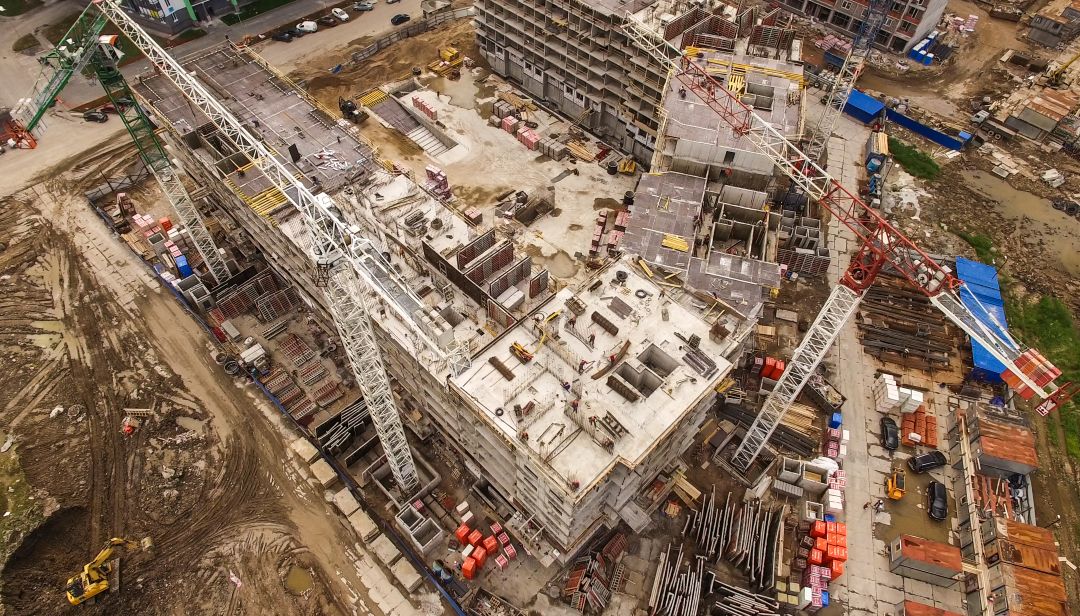
Getting the right aggregates for your project is one of the first steps in the planning process. Your project’s timeline relies heavily on it, so any delays or shortages can affect other phases of construction.
Large-scale projects often involve multiple sites, varied aggregate types and strict quality requirements. Understanding the market and preparing for logistical challenges in advance are essential for success.
There are many strategies used by contractors to manage aggregate sourcing risk and keep projects on track. This includes engaging suppliers early, assessing potential disruptions and balancing local sourcing with long-term contracts.
Coordinating supply with site needs also involves securing a reliable aggregate supply chain for large-scale construction. Combining these approaches supports smooth operations, even under changing market conditions.
In this blog, we’ll go through some aggregate procurement best practices for infrastructure contractors in the UK. We’ll also explain how contractors manage aggregate procurement effectively.
UK Aggregate Supply Trends, Challenges & Regulatory Changes
The demand for aggregates on construction sites in the UK has grown steadily over the years. At the same time, available reserves have decreased, putting pressure on contractors. Reports from the Mineral Products Association highlight this ongoing supply gap.
Brexit and environmental rules have added extra challenges. New quarry permissions take longer and import changes can affect delivery times. Contractors often face delays that can ripple through project schedules.
That’s why many contractors choose to work closely with suppliers to plan their project with the right priorities in mind. They look at local sources, maintain buffer stocks and sometimes set up longer-term agreements to ensure projects keep moving forward.
New rules under the Procurement Act 2023 also guide how contractors manage aggregate procurement. These rules ask for clear processes, fair pricing and attention to sustainability. Contractors must balance cost with environmental and legal obligations.
Planning, Risk Mitigation & Sourcing Strategy for Large Projects
Tier 1 contractors begin by estimating the aggregates that’ll be needed for each stage of a project. This helps avoid delays and unexpected costs. They also look at risks such as quarry shutdowns, transport delays or sudden price fluctuations.
However, the strategies used by contractors to manage aggregate sourcing risk in the UK can still vary. Some keep extra stock on-site, while others rely on nearby suppliers to cut delivery time.
Pre-engaging with reliable suppliers before work starts is another common aggregate procurement best practice for infrastructure contractors in the UK. This stage typically secures the availability of materials and ensures consistent quality throughout your project.
Planning early keeps schedules on track and costs under control. It allows contractors to respond to changes while ensuring they’ll store materials correctly upon arrival, maintaining the best aggregate quality.
Cost, Logistics & Sustainability in Aggregate Procurement
Transporting large amounts of aggregates across the UK can be tricky. Costs change often and delays on the road or at delivery points can slow down a project and increase expenses. Planning carefully can help keep things on track.
Storing materials on-site also needs attention. For instance, stockpiles that are too big or not well organised can get in the way of your team’s daily tasks or even go to waste.
Meeting sustainability requirements is another common challenge faced by contractors. If you’re facing this issue for your project, consider using recycled aggregates to reduce the environmental impact while still delivering a high-quality build.
Maintaining strong coordination between teams is equally important. Regular updates between suppliers and site managers help ensure materials arrive on time and reduce the risk of delays. This steady communication keeps the project organised and supports smoother progress overall.
Practical Takeaways for Contractors
Some projects have shown how small gaps in planning can lead to major setbacks later. In many cases, unclear delivery schedules or limited supplier options led to delays and higher costs. Careful preparation is key to preventing these problems at each stage of the project.
Successful projects often show how valuable strong supplier relationships can be. Contractors who maintain steady contact with their suppliers typically receive regular deliveries and consistent quality throughout their projects.
These examples highlight how contractors manage aggregate procurement in practice. If you’re working on a large-scale project and looking for a reliable supplier to get you the right materials on time, Middleton Aggregates is here to help.
Contact Middleton Aggregates for Large-Scale Project Requirements
At Middleton Aggregates, we supply a wide range of durable aggregates and fill materials for various construction and landscaping projects at reasonable rates. We also offer a plant hire service to meet all your construction needs.
Operating from Blackborough End, King’s Lynn, we serve Norfolk, Suffolk, Lincolnshire, Cambridgeshire and the wider UK. Our team of industry experts is always available to provide you with the best advice and answer questions you may have.
For more information on our products and services, visit our website or contact us.
4 Engineering Properties for Choosing Crushed Rock
At a Glance
Learn how to choose crushed rock for infrastructure projects by examining 4 engineering properties. Better understand aggregate types and their properties, the impact of particle size and shape on stability, how to balance strength with drainage and the importance of meeting UK regulations.
To support safe, compliant and long-lasting construction, contact MiddAggs.
How to Choose Crushed Rock for Infrastructure Use?
Understanding how to choose crushed rock for infrastructure is important for anyone involved in construction projects, from road building to heavy foundations.
Choosing the right material can make a project safer and more reliable in the long run.
Every type of crushed stone has both strengths and limitations, meaning that price and availability shouldn’t be the only determining factors. The wrong choice could lead to poor compaction and expensive drainage issues down the road.
One way to make more informed decisions is by choosing crushed rock based on compressive strength. Stronger rock types can withstand greater loads without breaking down, which makes them ideal for areas that carry heavy traffic or equipment.
It’s also important to think about crushed rock selection criteria for road foundations. Factors such as grading, particle size and shape all impact how well the base layer supports the surface above it.
For projects that involve very high pressure, engineers often consider the optimal crushed stone grade for heavy-load foundations. This ensures the material can balance strength with drainage, while still meeting UK building standards.
In this piece, we’ll explain 4 main factors that guide these choices, so you can reduce risks and get the best performance from your materials.
1. Understanding Aggregate Types and Their Engineering Properties
Aggregates come in many forms, including crushed rock and gravel. Each type behaves differently depending on its hardness and density, which affects how well it supports construction layers. The origin of the material can also influence performance.
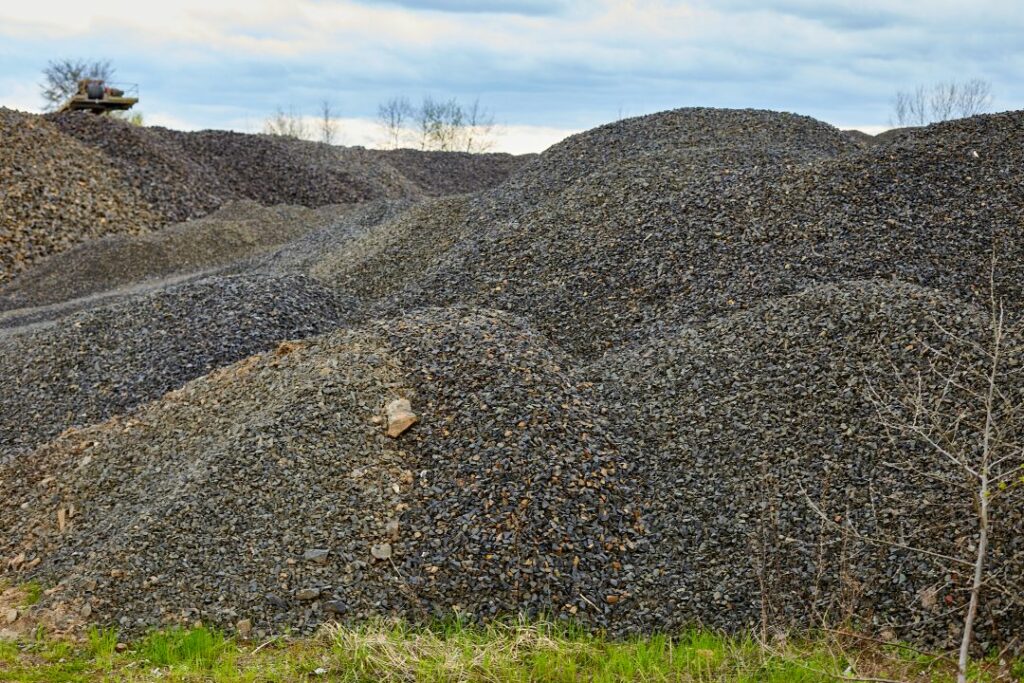
Crushed rock is widely used for infrastructure because the angular edges help the particles lock together. This locking effect improves stability and strength in layers that carry heavy loads.
Similarly, gravel works well for drainage and filling because of its irregularly shaped stones. However, not all types of gravel provide the same support under pressure. Sand can fill gaps and improve compaction, yet it cannot withstand heavy loads.
In the UK, crushed limestone and granite are common components in road subbases and drainage layers. The properties of these materials provide a strong foundation while meeting engineering and regulatory requirements.
2. How Particle Size and Shape Influence Structural Performance
The size and shape of crushed rock can change how well it supports a structure. Larger stones help spread the load, while smaller particles fill gaps and improve compaction. Together, they create a solid base that holds up over time.
Angular stones are preferred for heavy layers because their edges lock together. This interlocking improves stability and reduces movement under pressure. Rounded stones slide more easily and do not give the same strength.
The distribution of particle sizes matters too. A mix of coarse and fine materials ensures the base is dense and compact, helping it carry heavy loads without settling unevenly.
Understanding how to choose crushed rock for infrastructure involves considering both particle size and shape. Selecting the right combination provides better load transfer and long-lasting support for any project.
3. Evaluating Strength, Load-Bearing Capacity and Drainage
Crushed rock should be strong enough to carry heavy loads without breaking. Choosing crushed rock based on compressive strength helps ensure the base remains structurally sound under pressure.
The way the rock compacts affects its ability to support weight evenly. Properly compacted rock prevents sinking and keeps surfaces firm.
Drainage is also important to keep water from building up. Crushed rock should allow water to pass while still withstanding pressure.
Crushed rock that balances strength and drainage creates a stable layer that lasts for a long time. This makes the foundation safe and reliable for road bases and other infrastructure projects.
4. Meeting UK Standards While Avoiding Specification Errors
Crushed rock used in infrastructure projects must meet UK specification standards, like BS EN. These rules ensure that the material performs as expected under heavy loads and varying weather conditions.
Common specification errors include ordering the wrong grade, ignoring particle-size requirements, underestimating pressure or failing to check material origin. As a result of these mistakes, your project’s foundation can become weak and your drainage system might not function as intended.
To ensure you don’t run into any compliance issues, ask your supplier for technical documents and certificates in advance. At Middleton Aggregates, we provide clear documentation to help you purchase high-quality aggregates without worrying about compliance.
Contact Middleton Aggregates for Crushed Materials Today
Now that you understand how to choose crushed rock for infrastructure projects, are you ready to order your aggregates?
At Middleton Aggregates, we supply a wide range of durable aggregates and materials for various construction and landscaping projects at reasonable rates. We also offer a plant hire service to meet all your construction needs.
Operating from Blackborough End, King’s Lynn, we serve Norfolk, Suffolk, Lincolnshire, Cambridgeshire and the wider UK. Our team of industry experts is always available to provide you with the best advice and answer any questions you may have.
For more information on our products and services, visit our website or contact us today.
Choosing a Ready Mix Partner
Ready Mix Concrete Supplier Checklist
Planning on purchasing ready-mix concrete but unsure what to ask a ready-mix concrete supplier in the UK? You’ll find 4 essential questions to ask in this blog.
When looking for a good supplier of ready-mix concrete, you need to consider more than just delivery times. Procurement teams need clear proof that the concrete meets quality standards and complies with the right technical specifications.
A ready-mix concrete quality standards checklist that UK buyers can rely on makes this process easier and more transparent.
By asking the right questions, you also get better control over costs and delivery. This streamlines aggregate delivery and helps your team focus on moving the project forward instead of chasing suppliers for answers.
In this ready-mix concrete supplier checklist, we’ll go through 4 key areas to check with every supplier. These points will give you a clearer picture of the partner you’ll be working with and help to ensure a high-quality build.
1. “Can the ready mix supplier deliver the right mix design, strength, and compliance for your project?”
When choosing the correct materials, one of the first steps is to check the strength grade and expected durability for the build. Ask for the target concrete class and its design strength to avoid surprises.
Make sure the mixes meet BS EN 206 and BS 8500 standards for specification, production, and conformity. It also helps confirm that the ready-mix concrete specifications align with your project’s durability requirements.
Evaluating mix design sheets and test certificates before you order is important as well. Look for recognised certifications such as QSRMC certification, BSI Kitemark, or ISO-accredited quality management systems. Ask suppliers if they offer trial mixes and on-site technical support during the pouring process.
Middleton Aggregates publishes accreditations and documentation you can view online, and our team can adapt mix designs to suit foundations and slabs as required.
2. “How do they manage batching accuracy, delivery timing, and on-site coordination?”
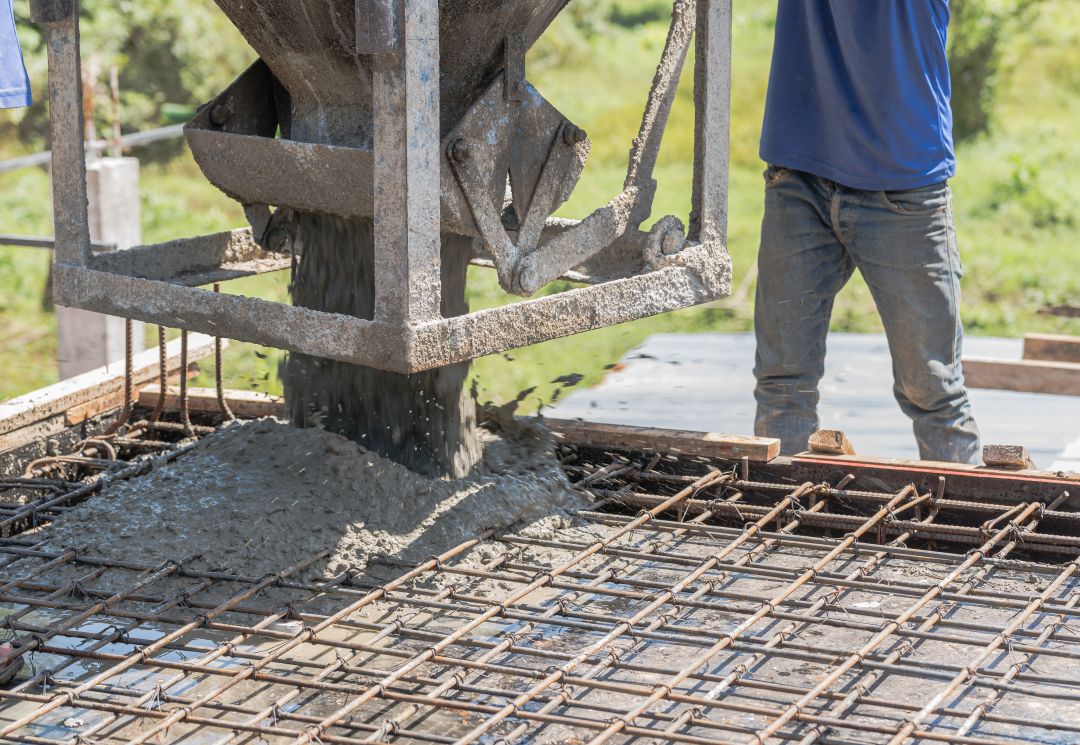
Accurate batching systems are important because even small errors can affect the strength and finish of the concrete. A reliable supplier should have processes that keep measurements consistent and in line with your project’s needs.
Delivery timing is just as important as batching accuracy. Using local aggregates can help reduce transport times, and clear scheduling is what ensures the mix reaches your site before it loses workability.
Strong communication with site managers makes coordination smoother, and a good supplier recognises that. Therefore, reputable suppliers use vehicle tracking and real-time updates to keep projects running without delays. This level of visibility helps you plan crew movements and equipment use with more confidence.
If you choose Middleton Aggregates for concrete, you can expect transparent updates, timely delivery, and a team that works closely with you to keep your project timeline on track.
3. “Are their pricing structures and billing models aligned with ready-mix procurement needs?”
Understanding how a supplier sets their prices is important before confirming an order. Look for clear pricing that explains how cement and haulage affect the product’s total cost.
Check if the suppliers offer volume-based pricing or clear cost structures for larger concrete orders. Transparent billing helps your team plan budgets and ensures the approval process has some breathing room in case of any surprises.
Additionally, confirm that the supplier you’re choosing has easy-to-follow payment terms. Having a clear idea of the payment structure allows your team to manage cash flow effectively and avoid unexpected costs.
For these reasons, ensuring that pricing structures and billing models align with your budget and concrete mix needs is an essential part of any ready-mix concrete supplier checklist.
4. “What proof do they offer of performance, reliability, and sustainable concrete practices?”
It is important to see evidence that a supplier can consistently deliver high-quality concrete. Ask for case studies or examples of past projects to understand how they have performed under similar conditions. Client testimonials can also give insight into their reliability and customer service.
Since many projects need to meet certain eco-friendly standards, sustainability might be a deciding factor as well. Check if the supplier tracks CO₂ emissions, provides environmental product declarations, or uses recycled aggregates where appropriate. Knowing these details helps your team meet ESG requirements and shows auditors that you take sustainability seriously.
If you choose Middleton Aggregates, our team can walk you through client testimonials, project case studies, and information on sustainable practices. This ensures you have the confidence and evidence you need before choosing your ready-mix partner.
Contact Middleton Aggregates for Ready-Mix Materials Today
At Middleton Aggregates, we supply a wide range of durable aggregates and fill materials for various construction and landscaping projects at reasonable rates. We also offer a plant hire service to meet all your construction needs.
Operating from Blackborough End, King’s Lynn, we serve Norfolk, Suffolk, Lincolnshire, Cambridgeshire, and the surrounding regions. Our team of industry experts is always available to provide you with the best advice on any questions you may have.
For more information about our products and services, contact us.