What Happens to a Quarry Once Extraction Ends? A Look at UK Quarry Restoration
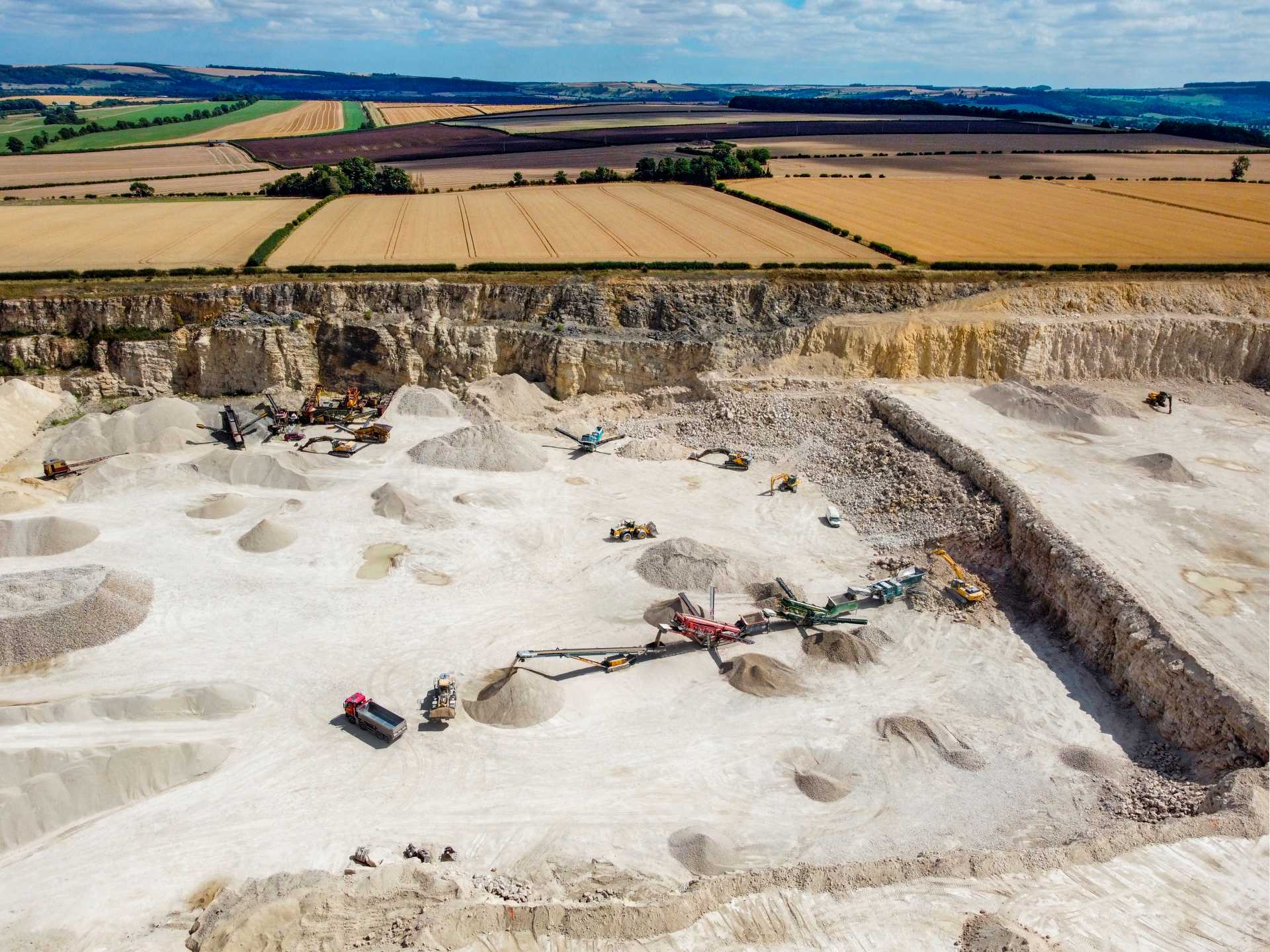
At a Glance
Quarry restoration prepares worked land for an agreed future use. That could mean farmland, woodland, wildlife habitat or recreation, depending on the site and its permissions. Planning starts before extraction finishes, while aftercare helps the restored land establish. A proposal is not evidence of completed restoration, so check the approved documents for the particular quarry.
What Happens to Quarries After Use?
A quarry’s working life is only part of its story. Once material has been extracted, the land needs to be prepared for its agreed future use. Responsibility for restoration and aftercare generally lies with the minerals operator, with the landowner responsible if the operator defaults.
For construction buyers, understanding that process makes it easier to ask useful questions about where materials come from. It also explains why activity may continue on the site even after extraction stops.
This guide looks at how quarry restoration works in England, including Norfolk.
What Does Quarry Restoration Actually Involve?
Quarry restoration prepares land after extraction for later use.
A quarry restoration plan includes:
- Restoration describes the work needed to achieve the agreed land condition.
- Afteruse means what the land will be used for.
- Aftercare covers the management needed.
A site may look green before its aftercare work is finished. Equally, a completed extraction area may still require earthworks before planting can begin.
The government’s minerals planning guidance explains how these stages fit together. Work depends on the individual site and does not follow a standard design for every quarry.
Why Is Restoration Planned Before Quarrying Ends?
Planning restoration early helps connect the extraction sequence with the eventual landscape.
For example, the plan needs to account for the land’s shape and the materials available to create it. Leaving every decision until the final load has been removed would make those choices harder to coordinate.
Norfolk’s Minerals and Waste Local Plan addresses progressive working, restoration and afteruse through Policy MP7, with aftercare requirements covered separately under Policy MP8. This means completed areas can be restored while extraction continues elsewhere, where the operation allows it.
Progressive restoration does not mean every working quarry should already look finished. Different phases may be active at the same time. To understand a particular site, check the approved phasing drawings, conditions and any later approved changes.
What Can Former Quarry Land Become?
There is no single answer to what happens to quarries after use. The outcome depends on the land, surrounding area and approved proposals.
Quarry land can be used for agriculture, woodland, wildlife habitat and recreation. However, a wetland scheme and an agricultural scheme need different land conditions and management. Quarry land used for a public walking route also raises different access questions from land returning to private farming.
Don’t assume that a former quarry will automatically become a lake, a nature reserve or a housing development. Those are possibilities to investigate, rather than a promise attached to extraction.
For a local example of planning in progress, Norfolk’s register contains a River Nar restoration improvement proposal linked to Pentney Quarry. The document describes proposed river works, but should not be read as confirmation that those works have been completed.
How Does Quarry Restoration Work in Practice?
The quarry restoration sequence follows the approved scheme. Broadly, the work involves preparing the final landform for its intended use, then providing the conditions needed to establish that use.
That may involve reshaping worked areas, managing water and placing suitable soil materials. Later work might include establishing vegetation or managing habitats.
These activities need to be considered together. Planting alone does not explain whether the underlying land is ready for its intended use. Likewise, a finished-looking slope does not tell you what aftercare is still required.
There is no fixed completion date. A small finished phase and a large site still being worked on are different situations. The approved programme and current planning record can give a more defined answer.
What Does This Mean for Communities and Wildlife?
Restoration creates an opportunity to plan a future landscape, but the details determine what that opportunity delivers.
For communities, useful questions include whether public access is part of the scheme, how the restored land connects with its surroundings and who will manage it. For wildlife habitats, the relevant question is what is being established and how it will be maintained, rather than simply how attractive the planting looks.
Extraction still uses finite mineral resources, while restoration addresses the land’s next use. It does not replace the mineral already extracted or make every material interchangeable with a recycled alternative.
That distinction supports a balanced discussion of primary aggregates, recycling and responsible land management.
What Should You Ask Middleton Aggregates Before Ordering?
Middleton Aggregates produces and supplies aggregates and fill materials from its Norfolk base, with both operations and sourced products in the range. We operate from our head office and quarry in Blackborough End, along with other outlets at Pentney, East Bilney and Ketteringham. However, not every product sold comes from the same quarry.
When knowing the origin matters to your project, ask which product and source are being quoted, what supporting information is available and which site record is relevant. Head to our documentation page for published product and operational information.
For aggregate advice, a quote or delivery enquiries across Norfolk, Suffolk, Cambridgeshire and Lincolnshire, enquire with Middleton Aggregates or call 01553 841044.


