4 Engineering Properties for Choosing Crushed Rock
At a Glance
Learn how to choose crushed rock for infrastructure projects by examining 4 engineering properties. Better understand aggregate types and their properties, the impact of particle size and shape on stability, how to balance strength with drainage and the importance of meeting UK regulations.
To support safe, compliant and long-lasting construction, contact MiddAggs.
How to Choose Crushed Rock for Infrastructure Use?
Understanding how to choose crushed rock for infrastructure is important for anyone involved in construction projects, from road building to heavy foundations.
Choosing the right material can make a project safer and more reliable in the long run.
Every type of crushed stone has both strengths and limitations, meaning that price and availability shouldn’t be the only determining factors. The wrong choice could lead to poor compaction and expensive drainage issues down the road.
One way to make more informed decisions is by choosing crushed rock based on compressive strength. Stronger rock types can withstand greater loads without breaking down, which makes them ideal for areas that carry heavy traffic or equipment.
It’s also important to think about crushed rock selection criteria for road foundations. Factors such as grading, particle size and shape all impact how well the base layer supports the surface above it.
For projects that involve very high pressure, engineers often consider the optimal crushed stone grade for heavy-load foundations. This ensures the material can balance strength with drainage, while still meeting UK building standards.
In this piece, we’ll explain 4 main factors that guide these choices, so you can reduce risks and get the best performance from your materials.
1. Understanding Aggregate Types and Their Engineering Properties
Aggregates come in many forms, including crushed rock and gravel. Each type behaves differently depending on its hardness and density, which affects how well it supports construction layers. The origin of the material can also influence performance.
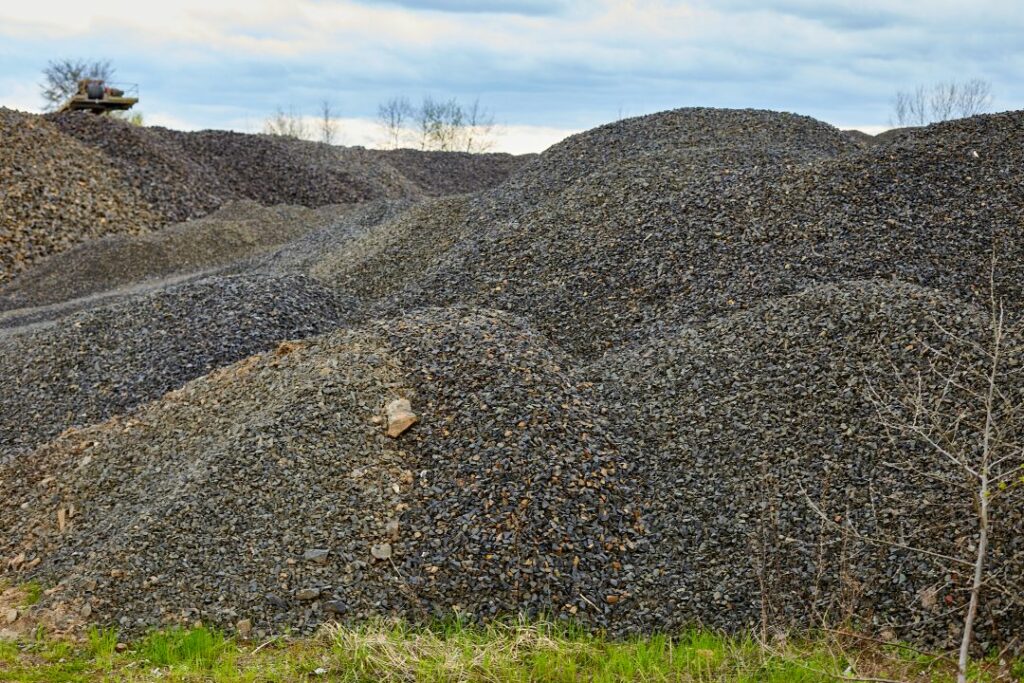
Crushed rock is widely used for infrastructure because the angular edges help the particles lock together. This locking effect improves stability and strength in layers that carry heavy loads.
Similarly, gravel works well for drainage and filling because of its irregularly shaped stones. However, not all types of gravel provide the same support under pressure. Sand can fill gaps and improve compaction, yet it cannot withstand heavy loads.
In the UK, crushed limestone and granite are common components in road subbases and drainage layers. The properties of these materials provide a strong foundation while meeting engineering and regulatory requirements.
2. How Particle Size and Shape Influence Structural Performance
The size and shape of crushed rock can change how well it supports a structure. Larger stones help spread the load, while smaller particles fill gaps and improve compaction. Together, they create a solid base that holds up over time.
Angular stones are preferred for heavy layers because their edges lock together. This interlocking improves stability and reduces movement under pressure. Rounded stones slide more easily and do not give the same strength.
The distribution of particle sizes matters too. A mix of coarse and fine materials ensures the base is dense and compact, helping it carry heavy loads without settling unevenly.
Understanding how to choose crushed rock for infrastructure involves considering both particle size and shape. Selecting the right combination provides better load transfer and long-lasting support for any project.
3. Evaluating Strength, Load-Bearing Capacity and Drainage
Crushed rock should be strong enough to carry heavy loads without breaking. Choosing crushed rock based on compressive strength helps ensure the base remains structurally sound under pressure.
The way the rock compacts affects its ability to support weight evenly. Properly compacted rock prevents sinking and keeps surfaces firm.
Drainage is also important to keep water from building up. Crushed rock should allow water to pass while still withstanding pressure.
Crushed rock that balances strength and drainage creates a stable layer that lasts for a long time. This makes the foundation safe and reliable for road bases and other infrastructure projects.
4. Meeting UK Standards While Avoiding Specification Errors
Crushed rock used in infrastructure projects must meet UK specification standards, like BS EN. These rules ensure that the material performs as expected under heavy loads and varying weather conditions.
Common specification errors include ordering the wrong grade, ignoring particle-size requirements, underestimating pressure or failing to check material origin. As a result of these mistakes, your project’s foundation can become weak and your drainage system might not function as intended.
To ensure you don’t run into any compliance issues, ask your supplier for technical documents and certificates in advance. At Middleton Aggregates, we provide clear documentation to help you purchase high-quality aggregates without worrying about compliance.
Contact Middleton Aggregates for Crushed Materials Today
Now that you understand how to choose crushed rock for infrastructure projects, are you ready to order your aggregates?
At Middleton Aggregates, we supply a wide range of durable aggregates and materials for various construction and landscaping projects at reasonable rates. We also offer a plant hire service to meet all your construction needs.
Operating from Blackborough End, King’s Lynn, we serve Norfolk, Suffolk, Lincolnshire, Cambridgeshire and the wider UK. Our team of industry experts is always available to provide you with the best advice and answer any questions you may have.
For more information on our products and services, visit our website or contact us today.