How to Lay Decorative Aggregates to Achieve the Perfect Finish
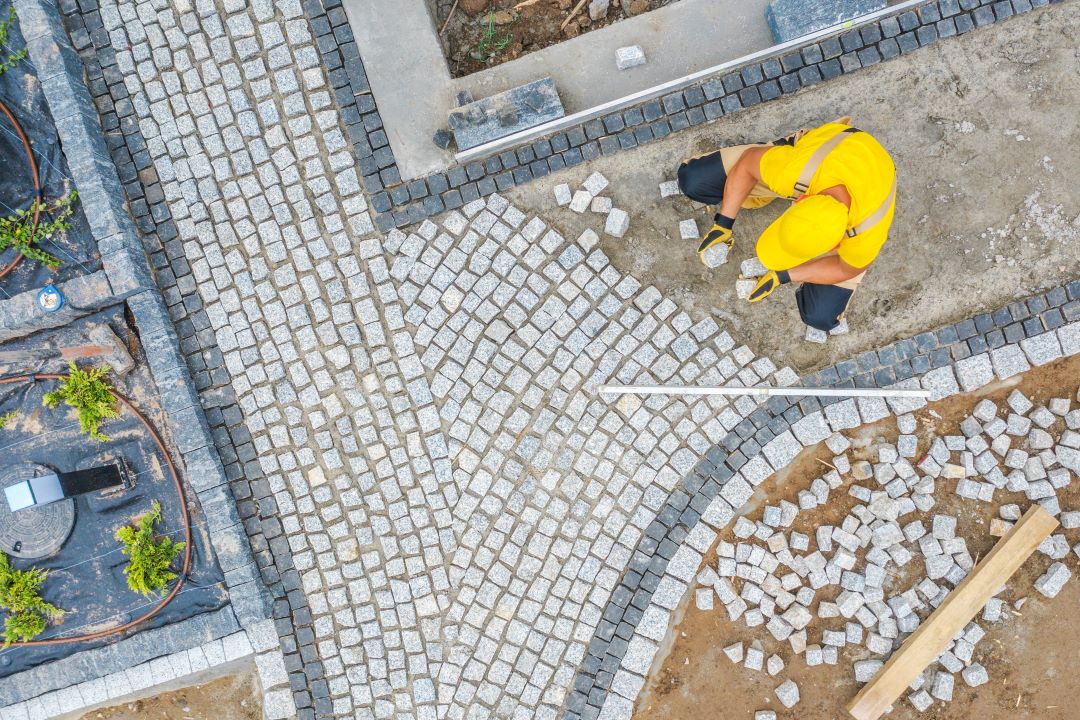
Decorative aggregates are commonly used in landscaping projects including driveways, footpaths, edge detailing, gardens, patios, and many other large landscaped areas.
The best part about these aggregates is that they’re fast to lay, with no need for curing times or specialist machinery. Once the base is prepped and the right material is chosen, decorative aggregates can provide your landscape with a sleek finish that lasts for a long time.
That said, knowing how to lay decorative aggregates correctly is essential to achieving the perfect finish. Skipping certain steps when laying decorative stones can lead to frequent maintenance issues further down the road.
Additionally, without proper ground prep or depth control, your landscaping project’s finish won’t last long. When decorative stones aren’t laid properly, you’ll find that the stones will start shifting, weeds will push through, and dips will start to form after a few months.
In this guide, we’ll explore how to lay decorative stones step-by-step, covering everything from ground prep to final touches for a durable, aesthetically appealing finish.
Step 1 – Choose the Right Decorative Aggregates
Different stones suit different applications, making it essential to select the appropriate decorative aggregate for your project.
Angular aggregates, such as gravel or crushed stone, are ideal for driveways and paths due to their stability and grip. Smoother stones, like pebbles or slate chippings, are better for garden beds or patios due to their aesthetic appeal.
The colour and the size of these aggregates plays a big role in determining the overall look of your landscape. Large stones create a bold texture that may be harder to walk on, whereas smaller stones offer a smoother, finer finish.
If you’re unsure about which stones to choose, speak to Middaggs about the best materials and we’ll offer tips on how to lay decorative aggregates properly.
Step 2 – Measure Your Material Requirements
Before making any purchase, get an accurate measure of your project area using a tape measure. To work out how much you need, multiply the length by the width, and it should give you the total area you need to cover.
Next, decide how deep the layer should be. For most decorative aggregate projects, a depth of around 40-50mm provides enough coverage and durability without wasting material.
At Middaggs, we have an online aggregate calculator that can help you calculate how much you need. Alternatively, ask us for clear instructions, and we’ll help you choose the right quantity.
Step 3 – Clear & Prepare the Ground
Before you begin laying your aggregate, make sure that the surface area is clear and flat. Remove all grass, weeds, debris, and loose soil. If the area is uneven, rake it over and level it as best as you can.
For weed control, you’ll want to lay down a membrane that lets water through while blocking weeds from pushing up. Cut it to size and trim around any edges or curves to keep your project running smoothly once the process begins.
Step 4 – Add a Solid Subbase (If Needed)
If you’re laying aggregates in a high-traffic area, like a driveway or path, you’ll need a solid subbase to withstand the pressure. To achieve this base, spread a layer of MOT Type 1 (or similar crushed hardcore) around 50-100mm deep (depending on your project’s needs) and rake it out evenly.
This provides a stable, firm foundation that helps prevent sinking and movement over time, keeping your landscape looking appealing even years later. For purely decorative areas like borders or gardens, you can usually skip this step.
Step 5 – Lay the Decorative Aggregates
After all the groundwork, comes the satisfying bit – laying your decorative aggregates. Pour the aggregates carefully over the membrane, starting from one end and working your way across. Use a shovel or wheelbarrow to ensure the material is spread evenly.
Knowing how to lay decorative aggregates at the correct depth is one of the most crucial factors in achieving a solid, aesthetically pleasing result. Aim for a consistent depth as you go and take your time during this step, as even spreading helps avoid thin patches that could expose the membrane underneath.
Step 6 – Tidy the Edges & Add Final Touches
The edges make a big difference in how clean your final finish looks. Consider adding some edging stones, timber borders, or metal edging to keep your landscape looking neat and to stop aggregates from spilling out.
Once that’s done, give the surface a final rake, check for any dips or peaks, and add more decorative stones where needed. If it’s a driveway or a high-traffic path, you might want to go over it with a plate compactor to bed everything in properly.
Give your aggregates a day or two to settle down before adding any other decorative elements on top. This will ensure your finish remains clean and consistent.
Contact Middleton Aggregates for High-Quality Decorative Aggregates
Now you know how to lay decorative aggregates properly, to achieve the perfect finish that’s both solid and aesthetically appealing, you need a reliable decorative aggregates supplier. That’s where we can help you with your next project.
At Middleton Aggregates, we supply a wide range of durable aggregates and fill materials for various construction and landscaping projects. We also offer a plant hire service to meet all your construction needs.
Operating from Blackborough End, King’s Lynn, we serve Norfolk, Suffolk, Lincolnshire, Cambridgeshire, and the wider UK. Our team of industry experts is always available to provide you with the best advice on any questions you may have.
For more information on our products and services, visit our website or contact us to find out more.